Last-Minute September Elk Tags 2026: Five-State Guide
No elk tag in mid-August? You can still bugle at bulls this September. Here's every realistic tag source left in Colorado, Utah, Wyoming, Idaho, and Arizona — and how fast each door is closing.
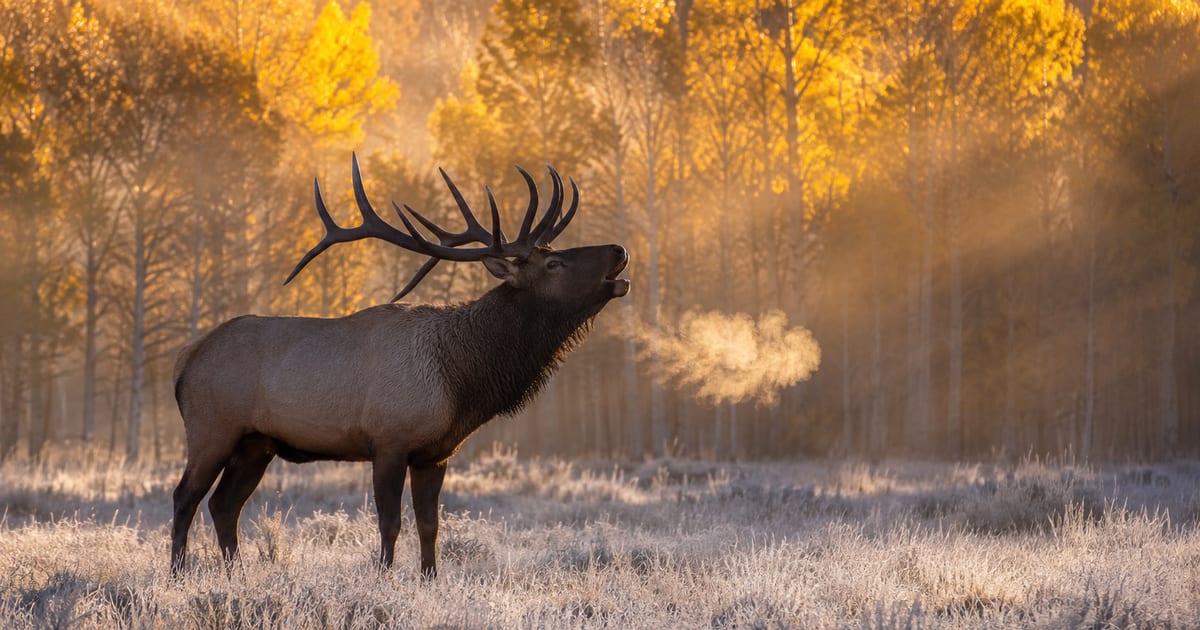
Every August we get the same message from somebody: draw results went sideways back in spring, summer disappeared, and now the group text is full of guys asking whether September is simply lost. It isn’t. Not even in 2026, the year the West got noticeably stingier with tags.
But the honest picture changed this year, and most of the “just buy an OTC tag” advice floating around is describing 2023. Colorado closed unlimited nonresident archery west of I-25. Idaho’s nonresident general tags moved to a December draw. What’s left in mid-August 2026 is a short list of real doors, each with its own clock. Here they are, ranked by how likely they are to put a bugle in front of you next month.
Colorado: Three Eastern Codes and a Wednesday Ritual
Still the best last-minute state, just no longer effortless for nonresidents.
Residents: nothing changed. OTC archery elk (Aug 30 – Sep 28) is a purchase, not a plan. Buy tonight, hunt the opener.
Nonresidents have two September paths. First, three over-the-counter archery codes east of I-25 — E-F-059-V1-A, E-F-133-U1-A, E-E-087-U1-A — plains and river-break country where the hunting is real but access takes phone calls and walk-in-atlas homework. Second, and better if you want the mountains: the weekly reissue list. Surrendered limited licenses — including west-slope September archery codes — preview every Tuesday at 11 a.m. MT and sell Wednesdays at 11. We wrote the full Wednesday-sniping playbook; the short version is a ranked code list, a logged-in account, and stubbornness. The full story on what changed this year is worth five minutes if it’s news to you.
Cost for a nonresident: $672.25 all-in plus the qualifying license. September 15–25 is peak breeding statewide.
Utah: The Any-Bull Counter Is Still Open
Utah quietly remains the most direct “tag this week, rut hunt next month” purchase in the West. General-season any-bull permits cover a broad set of units — mostly high, steep country along the Wasatch and Uintas — and 2026’s any-bull season runs August 15 through September 16. That back half overlaps real rut activity, and the permits sell over the counter until the allocation runs out.
Check the Utah DWR remaining permits page (wildlife.utah.gov/remainingpermits) before you assume anything is left — mid-August inventory changes daily. While you’re there, look at the spike-only units and the HAMS hunts (handgun-archery-muzzleloader-shotgun) — HAMS units run an archery window covering the whole of September, and they’re chronically overlooked because nobody can be bothered to read past the acronym.
The catch is terrain honesty. Any-bull units hold elk at 9,000–11,000 feet in country that punishes a flatlander who did zero summer cardio. If that’s you, aim lower and hunt water. Our Utah elk guide maps which units fit which fitness budget.
Utah's Window Closes Mid-September
The 2026 any-bull general season ends September 16 — you get the front half of the rut, not the crescendo. Buy this week, burn a personal day, and hunt the September 10–16 stretch rather than promising yourself “later in the month.” Later in the month doesn’t exist on this permit.
Wyoming: Leftover Inventory, Mostly Antlerless by Now
Wyoming’s leftover machinery ran in July — a leftover draw June 22–26, then unsold licenses went on sale July 8 first-come (1,818 elk licenses at that point), with reduced-price cow/calf inventory following July 15. Five weeks later, the honest read: the full-price bull licenses in huntable units are largely picked over, but cow/calf elk inventory started at 10,220 licenses and that pool routinely survives deep into fall.
So Wyoming in mid-August is a meat-and-experience play. A reduced-price cow tag in the right unit gets you September glassing, packing quarters, and a unit scouted for a future bull application — for a few hundred dollars instead of the nonresident bull price. Watch the WGFD leftover list (it updates as licenses trickle back), read our Wyoming leftover strategy notes, and remember Wyoming’s wilderness rule: nonresidents can’t hunt designated wilderness without a guide or resident companion. Plan the unit accordingly.
Idaho: The Door That Closed — and the Crack That’s Left
This is the big 2026 change most hunters still haven’t absorbed: Idaho’s nonresident general deer and elk tags are no longer first-come, first-served. They went to a draw — applications ran December 5–15, 2025, with a second window in February. If you didn’t apply, you can’t just show up and buy a general tag anymore. Here’s the complete breakdown of the new system.
The crack in the door: returned tags. Idaho recirculates nonresident tags that get returned, and unsold zone inventory when it exists, through its license system — sporadically, in small numbers, gone fast. If Idaho specifically matters to you this fall, set a daily two-minute check of the IDFG nonresident tag page. Otherwise, put your energy into Colorado or Utah for September and put early December 2026 on your calendar in ink — that’s when the application window for 2027 tags is expected to open (verify at idfg.idaho.gov once announced). Residents, meanwhile, can still buy general tags across most zones and hunt September archery — the change is a nonresident story.
Arizona: Not This Year — But Two Minutes Now Pays Next Fall
We’ll save you the search: Arizona elk is draw-only. No OTC bull tags, no leftover archery elk worth planning around in August, and the 2026 draws are long done. Anyone promising you a last-minute Arizona September bull is selling something.
The two minutes worth spending: Arizona’s fall 2027 elk application will come due next spring, its bonus point system rewards starting now, and the state runs genuine 45%-draw-odds archery hunts in good units for applicants who pick codes with data instead of forum folklore. That’s a winter project, and it starts with the draw odds tool.
Have the Tag? Build the Plan in Sixty Seconds
Whichever door you walk through, the clock problem inverts the moment you’re holding a tag: three weeks to learn a unit you’ve never seen. Feed the state, unit, and species into our Tag-to-Trail planner and it builds the execution plan — verified hunt zones with real coordinates, morning/midday/evening plays, camp and access logistics, GPX files for your GPS — from the same data we’d use ourselves.
The Ranked Shortlist, If We Were You
- Colorado resident? Buy archery tonight. Done.
- Nonresident with September dates blocked out: Utah any-bull this week (check remaining inventory first), while running Colorado’s Tuesday/Wednesday reissue ritual in parallel for a west-slope code.
- Freezer-first hunter: Wyoming reduced-price cow inventory. Least glamorous, most guaranteed pack-out.
- Plains-curious: Colorado’s three eastern archery codes, if you’ll do the access homework.
- Idaho loyalist: daily returned-tag check, December application on the calendar.
One of us tagged a six-point on September 19 a few seasons back with a license bought September 2 off a returned-tag list — the plan was two topo maps and a gas-station breakfast burrito. Late tags aren’t a consolation prize. They’re just elk hunting with the procrastination priced in.
FAQ
Can I still buy an over-the-counter elk tag for September 2026?
Yes, in two states realistically: Colorado (unlimited for residents; three eastern archery codes for nonresidents) and Utah (general any-bull permits, on sale until allocations run out, season ending Sep 16). Wyoming leftovers are mostly antlerless by mid-August, and Idaho’s nonresident general tags now require the December draw.
What changed for last-minute elk hunters in 2026?
Two big things: Colorado eliminated unlimited nonresident OTC archery elk west of I-25 (limited draw codes now), and Idaho moved all nonresident general deer/elk tags from first-come sales to a drawing. The era of the spontaneous September nonresident bowhunt is down to specific, smaller doors.
When is the elk rut in September 2026?
Bulls begin vocalizing the first week of September, activity escalates mid-month, and peak breeding runs roughly September 15–25 across most western states. Utah’s any-bull season (ends Sep 16) catches the build-up; Colorado archery (through Sep 28) covers the peak.
Are leftover or reissued tags worse hunts than drawn tags?
The license is identical — same unit, same season, same rules. The only thing you lose is preparation time, which is a solvable problem: e-scout hard, hunt water and evening thermals, and lean on unit data instead of assumptions.
What’s the cheapest way to hunt elk this September?
Wyoming’s reduced-price cow/calf leftover licenses, followed by a Colorado resident archery tag. For nonresident bull hunting, Utah any-bull and Colorado (either path) both land near the $670–$1,000 range once licenses and stamps stack up.
Disclaimer: Availability described here was accurate as of August 13, 2026 and changes daily — leftover lists sell down, reissue lists refresh weekly, and remaining-permit pages update in real time. Verify current inventory with each state agency (cpw.state.co.us, wildlife.utah.gov, wgfd.wyo.gov, idfg.idaho.gov, azgfd.com) before buying or booking anything.
Next Step
Check Draw Odds for Your State
Tag-level draw odds across 9 western states — filter by species, unit, weapon, and points. Free to use.
Get the Insider Edge
Join hunters getting exclusive draw odds data, gear deals, and weekly hunt planning tips.
Related Articles
Arizona OTC Archery Deer 2026: Unit Limits and Closures
Arizona's OTC archery deer season opens August 21, 2026 — and units close the moment harvest limits fill. Here's every unit's limit, plus the best bets by real archery success rates.
Colorado OTC Elk in 2026: What Changed for Nonresidents
Colorado eliminated unlimited nonresident OTC archery elk west of I-25 for 2026 — and Gunnison rifle tags went draw-only. Here's exactly what's still on the shelf and how to hunt this fall anyway.

Colorado Reissue Licenses: How to Grab Returned Elk Tags
Every Wednesday through fall, CPW sells back surrendered limited licenses — including elk tags nonresidents can't get any other way in 2026. Here's the Tuesday-Wednesday ritual that actually lands one.
No comments yet. Be the first to share your experience!