How to Pre-Scout Western Hunting Units Using Maps
Learn how to pre-scout elk, mule deer, and pronghorn units from home using Google Earth, onX Hunt, and CalTopo — identify terrain features, water sources, and travel corridors before you ever leave the house.
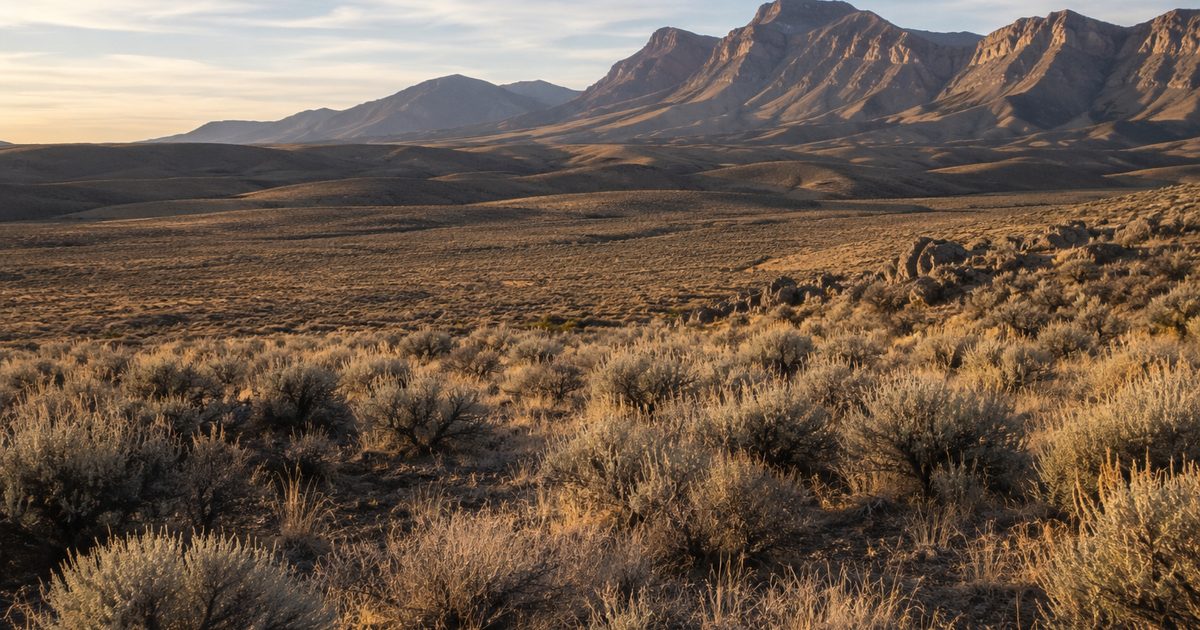
Most hunters arrive at a western unit with a vague plan to “find animals.” The ones who consistently fill tags don’t leave it to chance — they build a scouting hypothesis from the couch before they ever load the truck. Maps don’t replace boots on the ground, but they let you walk into the field asking the right questions instead of wandering through country you don’t understand.
The tools available now — satellite imagery, topo overlays, land ownership layers, historical aerial photos — give you more pre-hunt information than a full scouting trip provided a decade ago. The key is knowing what each tool actually tells you, and more importantly, what it can’t.
What Maps Can Tell You (and What They Can’t)
Before you open a single map, be clear on its limits. Satellite imagery tells you what the terrain looks like from above. Topographic contour lines tell you how steep it is. Land ownership layers tell you who controls the ground. None of them tell you whether elk are using a drainage right now, what the hunting pressure looks like, or whether the trail on the map has washed out.
Maps build your hypothesis. Field time confirms or kills it. Plan to arrive with 6–10 specific locations to investigate on foot, not 1 perfect spot you’ve decided on from your desk.
Reading Topo Maps for Big Game Habitat
Topographic contour lines are the most information-dense layer on any hunting map. Tightly spaced contours mean steep ground. Widely spaced contours mean gentle slopes. For elk and mule deer, that distinction matters enormously.
Benches are the flat or gently sloping interruptions in otherwise steep terrain. On a topo map, they appear as widely spaced contours sandwiched between zones of tight lines above and below. Benches are feeding areas. Elk and deer move across them without burning energy, they’re often grassy or brushy from water runoff, and they offer a thermal advantage — bedded animals can smell threats from below while watching for movement above. Any bench at the right elevation for your season deserves a waypoint.
Saddles are the low points connecting two ridges or peaks. On a topo map, a saddle shows as an hourglass shape — two high-elevation areas connected by a narrow pinch point. Animals cross saddles because they’re the path of least resistance over a ridge. They’re not feeding areas; they’re travel corridors. Set an ambush at a saddle and you’re intercepting animals moving between drainages, not waiting for them to wander past by accident.
Cliff bands and canyon walls force movement into pinch points. Look for areas where steep terrain pushes animals into a narrow strip — a timber bench above a cliff, a strip of cover between two open slopes. These compressions are where you want to intercept.
Contour intervals reveal timber density too. Compare satellite imagery against the topo layer: dark green patches that hold their color in fall aerials are north-facing stands of dense timber. These are where elk and mule deer bed during the day. Lighter patches — aspen, open sage, or grassland parks — are feeding areas. The transition edge between dark timber and open feed is where the best morning and evening action happens.
Print Before You Go
CalTopo’s free tier lets you create custom map prints with any combination of layers — topo contours, satellite imagery, and land ownership — on a single page. Print your hunting area at 1:24,000 scale and carry it as a waterproof backup. A phone with a dead battery is useless. A paper map never runs out of power.
Google Earth: Terrain Analysis from Any Angle
Google Earth Pro is free, and it’s still the best tool for understanding terrain in three dimensions. The flat satellite view shows you what’s there; the 3D tilt shows you how the terrain actually lies.
Start with a 3D flyover of the entire drainage. Look for features that don’t show well on a flat topo — north-facing slopes with dense timber, open parks buried in bowls, seeps and springs that appear as bright green patches in otherwise dry country. Tilt the view until you can see into canyon bottoms and assess steep slopes from the side. A bench that looks enormous on a flat map might be a tiny ledge when you see it at a 45-degree angle.
The historical imagery slider is one of the most underused features in pre-season scouting. Click the clock icon and scroll through years of imagery for the same location. You’ll see burn perimeters and how the vegetation has recovered, seasonal changes in ground cover between wet Julys and dry Octobers, new road construction or recent logging, and water sources that appear in wet years but disappear in drought. That last one matters a lot in arid states like Arizona and Nevada — a spring that shows on the topo map may have been dry for five of the last ten years.
Compare summer imagery to fall imagery to see how cover density shifts during hunting season. A drainage that looks wide open in October satellite photos might look impenetrably thick in July. The imagery that matches your hunting season is the imagery you want to study most carefully.
Identifying Wallows from Satellite Imagery
Wallows are among the highest-value scouting targets for early-season elk hunters, and they’re notoriously hard to spot from the air. You won’t see a perfect circle of mud labeled on any map. What you’re actually looking for is the set of conditions that create wallows.
Focus on small springs and seeps in dense timber between 8,000 and 9,500 feet. In summer satellite imagery — especially late July and August — look for unusually dark, saturated patches near small water sources. Wallows appear darker than the surrounding soil because they stay wet, and the disturbed soil absorbs more light. The patch might be only 10–20 feet across. It won’t be obvious.
The practical approach: find every spring and seep in your target drainage on the topo map (look for small drainage convergences, or the blue spring symbol on USGS quads). Then zoom into the satellite imagery at each one. Mark any dark patch near soft ground or water as a candidate to investigate on foot. You’re not confirming wallows from satellite imagery — you’re building a list of places worth walking to.
Match Your Imagery to the Season
Summer satellite imagery is captured during the exact window when wallows are most active — bulls are using them hard from late July through September. A dark mud patch visible in August imagery is strong evidence of a wallow. But if the only available imagery is from spring or late fall, that patch may not show at all. Try to find the most recent August or September imagery for your area when scouting for wallows specifically.
onX Hunt: Land Ownership and Historical Aerials
The single most important function of onX Hunt isn’t the topo layer or the waypoints — it’s the land ownership overlay. Knowing exactly where public land ends and private land begins prevents trespass problems and reveals access routes that aren’t obvious from topography alone.
In the western states, land ownership is a patchwork of federal, state, BLM, private, tribal, and state trust ground, and the boundaries don’t follow terrain. A drainage that looks entirely accessible on a topo map might be cut off by a private inholding you’d never know about without an ownership layer. Pull up onX for your unit before you plan any access route.
The historical aerial imagery in onX serves a different purpose than Google Earth: it shows the same terrain at different points in the hunting season across recent years. Switch between late summer and early fall aerials to see vegetation changes, snow lines, and how water availability shifts in the weeks before and during your season. That comparison tells you how much the country changes between when you scout and when you hunt.
Build your waypoint library during the map-scouting phase:
- Glassing positions — high points with broad visibility and good thermal flow
- Water sources — springs, seeps, creek crossings, stock tanks
- Candidate wallows — dark patches near small water in dense timber
- Benches — potential feeding or bedding areas to investigate on foot
- Saddles — travel corridors worth watching
- Access routes — your planned approach for each area, plus alternatives if the primary is blown
Export everything to your phone with offline tiles downloaded before you leave cell service. Most western elk country loses signal within a mile of any trailhead.
CalTopo: Slope Angle Shading and Custom Printing
CalTopo adds one layer that Google Earth and onX don’t match: slope angle shading. This feature colors terrain by steepness — green for gentle slopes, yellow for moderate, red for near-vertical. It turns a flat topo map into an immediate read of where big game can actually move and bed.
For elk and mule deer scouting, look for the green zones (5–15 degrees) at the correct elevation for your season. These gentle slopes in the right aspect — north-facing, at 8,000–9,500 feet for early-season elk — are your bedding bench candidates. Cross-reference the slope angle layer with satellite imagery to confirm there’s timber cover on those benches, not just open rock or grass.
CalTopo also measures slope aspect precisely. A bench at 8,700 feet that faces north-northwest at 12 degrees is exactly the terrain feature you want for an early-season elk bedding area. That specificity matters when you’re choosing between three similar-looking benches and can only physically check two of them before the hunt starts.
Elevation Band First, Everything Else Second
Don’t try to read every feature across an entire unit at once. First narrow your scouting to the elevation band that matches your season: roughly 8,000–10,000 feet for archery in September, 6,500–8,500 feet for rifle in October, 5,500–7,500 feet for late-season hunts. Everything else — benches, saddles, water sources, timber cover — only matters if it’s in the right elevation zone for when you’re actually hunting.
Building a Scouting Hypothesis Before the Trip
Map scouting isn’t random browsing — it’s building a testable hypothesis about where animals will be and why. By the time you’ve spent 15–20 hours across these tools, you should be able to write out a specific prediction: “Bulls should be using the north-facing bench at 8,900 feet above the seep at the head of the left fork, staging to feed in the park below in the evenings.”
That’s a hypothesis you can test. You walk in, find the seep, check for tracks and hair, smell for musk, read the muddy ground for sign. Either the evidence is there or it isn’t. If it is, you know you’ve found the right drainage. If it isn’t, you move to your next candidate location without wasting two days wandering.
For pronghorn, the map-scouting calculus is different. Pronghorn don’t use terrain features the same way elk and mule deer do — they prefer open country and move along basin floors and gentle ridges. Your scouting focus shifts to water tanks, fence crossings with well-worn trails, and the connecting routes between open feeding flats. Topo features matter less; land ownership and water source locations matter most.
What You Still Have to Verify on Foot
Maps are honest about what they show and blind to everything else. Some things can’t be confirmed without boots on the ground:
Hunting pressure — A great-looking drainage might be pounded by a dozen other hunters because it’s easy to access. You won’t know until you see boot tracks on every trail.
Current sign — Fresh tracks, rubs, wallows in use, fresh droppings. Maps tell you where sign is likely; the ground tells you where it actually is.
Trail and road conditions — Roads shown on maps may have washed out, been rerouted, or been gated since the imagery was captured. Trails in burned areas can become impassable from blowdown.
Vegetation ground truth — A bench that looks lush and grassy on satellite imagery might be a boulder field with sparse grass. A dense-looking timber block might be open and park-like at ground level.
Water reliability — Springs on a topo map may be seasonal. Show up in a dry year and the spring that was supposed to anchor your scouting area might be a dry seep.
Don't Over-Commit to a Single Location from Maps Alone
The most common map-scouting mistake is falling in love with one spot from satellite imagery and treating it as a sure thing before you’ve set foot there. Build redundancy into your plan — three or four primary areas you’ve scouted, ranked by priority. If your top location doesn’t match expectations when you arrive, you’ve got somewhere to go instead of spending the first two days of your hunt improvising.
The goal isn’t to have your hunt mapped out perfectly before you go — it’s to arrive with enough specific knowledge that every day in the field is productive investigation, not orientation. The hunters who consistently kill in western units aren’t just more skilled in the field. They’ve done more homework before the trip, and they arrive with a plan that’s been built on hours of map time, not guesswork.
Maps give you the framework. The animals fill in the rest.
Next Step
Check Draw Odds for Your State
Tag-level draw odds across 9 western states — filter by species, unit, weapon, and points. Free to use.
Get the Insider Edge
Join hunters getting exclusive draw odds data, gear deals, and weekly hunt planning tips.
Related Articles
Arizona OTC Archery Deer 2026: Unit Limits and Closures
Arizona's OTC archery deer season opens August 21, 2026 — and units close the moment harvest limits fill. Here's every unit's limit, plus the best bets by real archery success rates.
Colorado OTC Elk in 2026: What Changed for Nonresidents
Colorado eliminated unlimited nonresident OTC archery elk west of I-25 for 2026 — and Gunnison rifle tags went draw-only. Here's exactly what's still on the shelf and how to hunt this fall anyway.
Colorado Reissue Licenses: How to Grab Returned Elk Tags
Every Wednesday through fall, CPW sells back surrendered limited licenses — including elk tags nonresidents can't get any other way in 2026. Here's the Tuesday-Wednesday ritual that actually lands one.
No comments yet. Be the first to share your experience!