Oregon Turkey Hunting: Merriam's and Rio Grande in the Pacific Northwest
Oregon turkey hunting — Merriam's in the Blue Mountains, Rio Grande in the Willamette Valley, spring draw system, and tactics for two distinct subspecies across very different terrain.
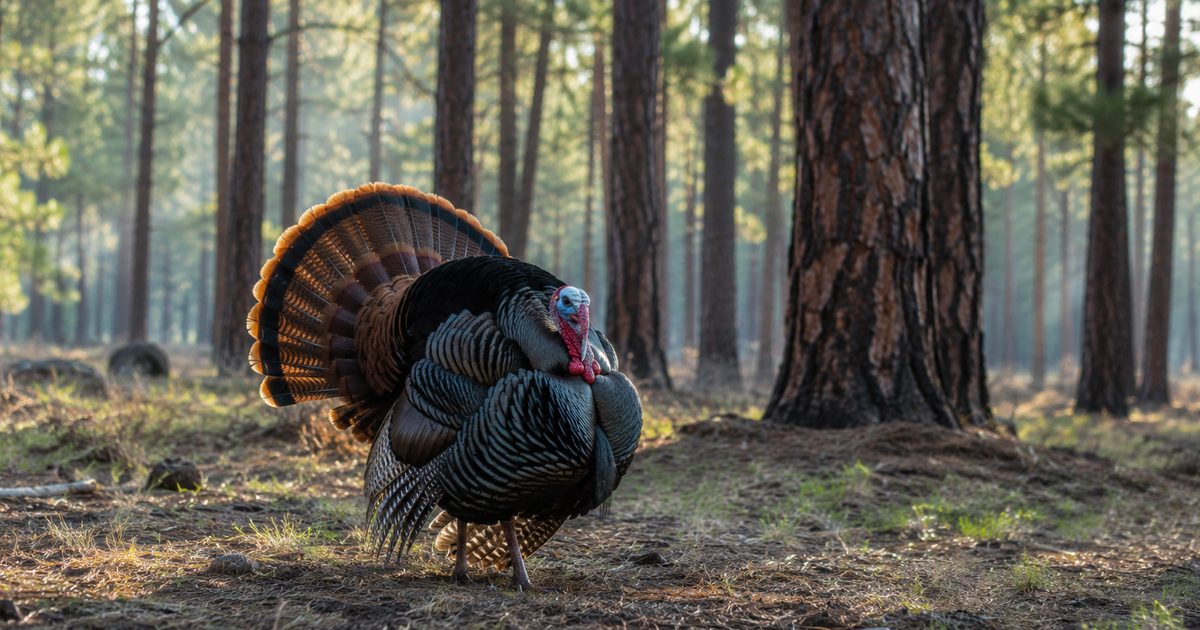
Oregon is one of those states that doesn’t get talked about enough in western turkey circles. It has two distinct subspecies occupying completely different terrain — Merriam’s in the rugged timber country of the Blue Mountains and Rio Grande birds spread across the Willamette Valley and the southwest corner of the state. That split creates two separate hunting experiences inside the same tag system, and knowing which subspecies you’re after changes everything about how you plan the trip.
Two Subspecies, Two Oregon Hunting Experiences
Merriam’s turkeys dominate eastern Oregon. These birds live in the high ponderosa and mixed-conifer country of the Blue Mountains, the Wallowa-Whitman National Forest, and the Umatilla National Forest. They’re classic elevation-zone birds — roosting in big timber, feeding in meadow openings, and covering ground along forest edges at first light. Merriam’s birds in Oregon behave the way you’d expect from turkeys in open western terrain: vocal, mobile, and willing to move a lot during the first two weeks of the spring season.
Rio Grande birds are a different story. They’re concentrated in the Willamette Valley and in southwestern Oregon near Roseburg and Medford. Rio Grandes gravitate toward agricultural edges, oak savanna, and mixed private-public ground. The hunting here is often more about access than it is about calling technique — navigating a patchwork of private farmland and BLM ground requires doing your homework before the season, not on opening morning.
The Oregon Draw System
Oregon spring turkey hunting requires a tag. You can get that tag one of two ways: the draw, or leftover tags purchased over the counter after draw results are posted.
The draw deadline typically falls in mid-March for the following spring season. Draw odds in most Oregon units run between 15% and 40% — reasonable odds compared to high-demand big game species, but not a guarantee. If you don’t draw, the leftover tag system gives you a real second chance. Oregon typically releases a good number of spring turkey tags in the leftover pool, and they’re available online on a first-come basis after draw results come out in late March or early April.
Apply Before Mid-March
Oregon spring turkey tags require a draw application. The deadline falls in mid-March each year. Miss the window and you’re hunting the leftover pool — smaller selection, same cost, but possibly limited to your second or third unit choice.
Nonresident spring turkey tags run $28 after drawing. That’s one of the better nonresident turkey tag prices in the West, which makes Oregon worth putting on your list even if you’re already hunting other western states in a given year.
Blue Mountains Merriam’s: Where to Focus
Wallowa County is the best single unit for Merriam’s turkey in Oregon. The combination of vast ponderosa pine habitat, open meadow country, and relatively low hunting pressure makes the Wallowas the top destination for eastern Oregon spring turkey. Union County and Baker County round out the core Merriam’s zone — all three counties have birds, public land access, and the kind of timber-to-meadow transitions that Merriam’s use heavily in spring.
The terrain in these counties runs from river bottom ponderosa at around 3,000 feet up into higher mixed-conifer benches. Gobblers roost in the big timber but spend mornings working toward open areas: forest roads, powerline corridors, old burns, and meadow edges. Getting between the roost and the feeding zone before first light is the fundamental play.
Wallowa County Is Oregon's Best Merriam's Unit
If you’re targeting Merriam’s in Oregon, Wallowa County should be your first application choice. The combination of public land access in the Wallowa-Whitman NF, high bird densities, and open ponderosa country gives you the most opportunities in the state.
Aggressive calling works well in the Blue Mountains, particularly in the first two weeks of season when toms are actively seeking hens. Yelping, cutting, and clucking draw responses from long distances in the open timber. Running and gunning — moving quickly to find responsive birds — is more productive than sitting in a blind waiting for a gobbler to commit.
Willamette Valley Rio Grande: Access Is the Variable
The Willamette Valley holds a solid Rio Grande population, but hunting access requires more planning than eastern Oregon. The valley is heavily private, and hunting pressure on the available public ground near Roseburg and Medford can be significant on opening weekend.
BLM ground in the Medford district and the Roseburg district offers real public access for Rio Grande birds. These units require a tag through the draw just like eastern Oregon units, and draw odds are generally good — sometimes better than the more well-known Merriam’s units in the east. The birds here are farmland-adapted Rio Grandes that use creek bottoms, oak stands, and field edges. They’ll gobble but they’re less likely to charge across a field at a call the way a Merriam’s might. Patient setups near travel corridors produce better than aggressive moving-and-calling strategies.
Southwestern Oregon around Medford is also worth noting for hunters who want to combine turkey with early bear hunting. The overlap in season timing and the mix of public BLM and USFS ground in that corner of the state makes it a multi-species destination if you plan it right.
Season Timing and Structure
The Oregon spring turkey season opens in mid-April and runs through late May. That arc covers the early gobbling peak (mid-April through early May), the mid-season lull when hens are on nests and toms go quiet, and a late-season window when receptive hens bring gobblers back on call again in mid-May.
The first two weeks of the season are the best window for calling. Birds that haven’t been pressured respond quickly — toms will double-gobble at hen calls from 400 yards and close the distance. By the third week of April, hunting pressure and natural breeding cycle progression will quiet the woods down. Late May can pick back up but requires patience.
Fall turkey hunting is available in some eastern Oregon units on an archery-only basis. Fall seasons are OTC in those units, which makes them accessible without any draw, but turkey calling in fall is a different skill set — breaking up flocks and calling birds back in rather than calling toms off roost.
Gear for Blue Mountains April Turkey
April mornings in the Wallowas and Blue Mountains run cold — temperatures in the 20s and 30s are common, and snow is realistic through mid-April. Layer for cold mornings you’ll shed by 9 AM. Wind can be strong in the open ponderosa country by afternoon. Bring a quality blind or wear full camo pattern suited to open timber, not the dark hardwood patterns designed for Midwest hunting.
OTC Fall Turkey and Season Options
Oregon’s fall turkey system gives archery hunters OTC access to some eastern units without going through the draw. These tags are inexpensive and allow hunters to target Merriam’s birds during the fall seasons that overlap with other big game seasons in the area. If you’re already going to eastern Oregon for deer or elk, carrying a fall turkey tag costs very little and adds another species to the trip.
The combined approach — applying for spring draw, hunting leftover tags if you miss the draw, and potentially adding an OTC fall archery tag — gives you multiple shots at Oregon turkey each year.
Using Draw Data to Time Your Application
Oregon draw odds for turkey are transparent compared to some states. ODFW posts historical draw data that lets you assess unit-by-unit odds before applying. Units in the Wallowa Mountains typically see more applicants than BLM-heavy Willamette Valley units, which shifts odds between regions even when total tag numbers are similar.
Running your unit preferences against historical data before the mid-March application deadline gives you a realistic picture of what you’re likely to draw at zero preference points versus stacking a point or two. For most Oregon turkey units, zero-point applicants with a realistic second choice draw tags within one or two years.
Check Oregon draw odds for unit-by-unit breakdown before you apply, and use the Draw Odds Engine to model your specific situation.
What Makes Oregon Worth the Trip
Oregon turkey hunting doesn’t have the name recognition of New Mexico or Kansas, but it delivers something most well-known turkey states don’t: Merriam’s birds in genuine mountain country, hunting pressure that stays light outside of opening weekend, and access to multiple subspecies and habitat types in a single license year.
The Wallowas specifically offer a hunting experience that feels more like an elk trip than a typical turkey hunt. You’re working timber, reading ridgelines, and covering miles of big country. The birds are here, the public land is accessible, and the draw odds are fair for a first-time applicant. That combination is worth more attention than Oregon turkey currently gets in the national conversation.
Sources & verification
Seasons, license fees, application windows, and draw structure for Oregon change every year. Always verify the current details against the official Oregon agency before applying or hunting.
- Oregon Department of Fish & Wildlife — dfw.state.or.us
Next Step
Check Draw Odds for Your State
Tag-level draw odds across 9 western states — filter by species, unit, weapon, and points. Free to use.
Get the Insider Edge
Join hunters getting exclusive draw odds data, gear deals, and weekly hunt planning tips.
Related Articles

Western State Draw Systems Explained
How all 9 western state hunting draw systems actually work — preference points, bonus points, and pure lotteries compared side by side with real odds data.

Arizona Bighorn Sheep Draw Odds Guide
Arizona bighorn is the definition of a lifetime tag. Here's the point math, unit breakdown, and why you apply every year regardless of your bonus point total.

Arizona Fall Turkey Draw Odds Guide
Arizona fall turkey is a low-point draw in the ponderosa country. Here's the unit breakdown, typical point requirements, and how to stack it with other Fall Draw applications.
No comments yet. Be the first to share your experience!