Oregon Mule Deer Draw Odds: Units, Points, and Nonresident Strategy
Oregon mule deer draw odds guide covering the preference point system, controlled vs. general licenses, top units including Steens Mountain, Hart Mountain, Warner Valley, and Owyhee country, plus nonresident draw strategy and a unit-by-unit point breakdown.
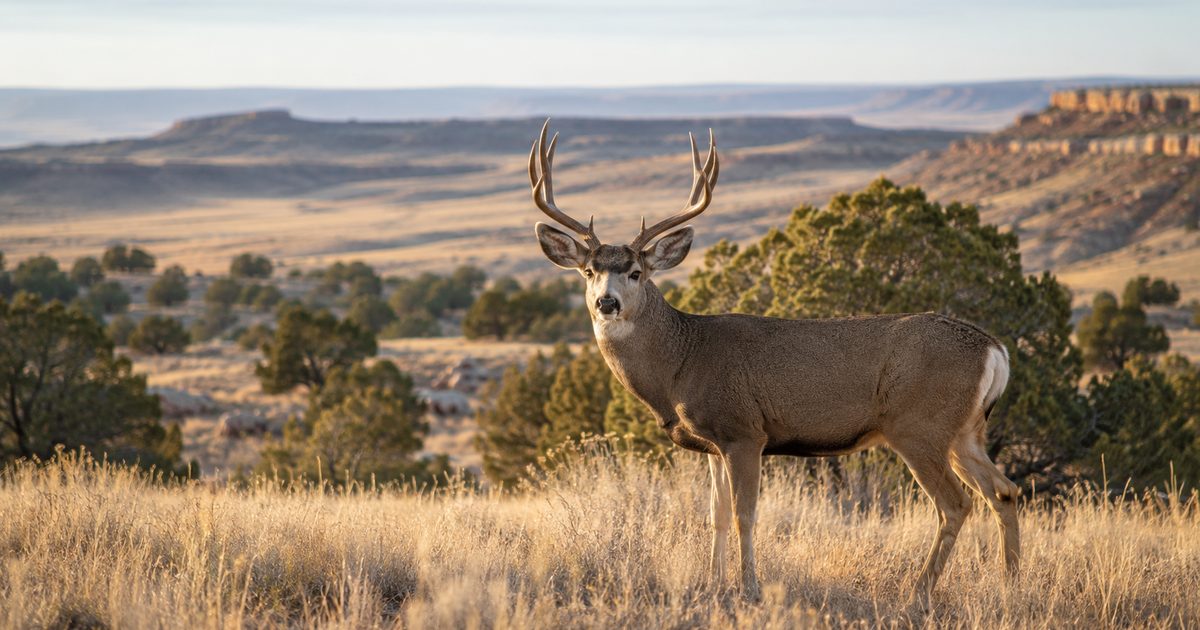
Oregon doesn’t get the same breathless coverage as Utah or Wyoming when hunters talk about mule deer, and that’s actually one of its selling points. The competition is real, the best units take some patience to draw, but Oregon is meaningfully more accessible for nonresidents than the two states it often gets compared to. If you haven’t built a strategy around Oregon’s high desert country, you’re leaving good deer on the table.
The state holds some of the most underrated mule deer habitat in the West. The Steens Mountain country, Hart Mountain, the Warner Valley, and the Owyhee canyonlands all produce mature bucks in the 175-to-190-inch range with regularity — and in exceptional years those same units push past 200. The question isn’t whether Oregon has the deer. It’s understanding how to get a tag.
How Oregon’s Preference Point System Works
Oregon uses a preference point system for controlled hunts — what most western states call limited-entry tags. The system is a weighted draw: your application gets one entry for every preference point you hold, plus one entry for the current year. A hunter with four points gets five entries. A hunter with zero gets one.
Points don’t reset after a failed draw. They accumulate until you draw a tag, at which point your points for that species reset to zero. Points for different species are tracked independently, so burning your mule deer points doesn’t touch your elk or pronghorn accumulation.
Oregon doesn’t run a pure queue — it’s weighted random, not strict first-in-line. That means lower-point hunters can still draw through luck, and high-point holders don’t have an absolute guarantee. But in practice, the most sought-after units develop soft minimums: the lowest point total that drew in a given year. Those soft minimums are the number to watch when you’re building a plan.
Two Types of Oregon Deer Tags
Oregon separates deer hunting into controlled hunts (limited draws) and general-season tags. The general-season tag covers most of the state with over-the-counter availability, but the top mule deer country sits inside controlled hunt boundaries. You’ll need to apply for those controlled hunts separately — they’re not covered by the general tag.
The application window for controlled hunts opens in late spring. Oregon Department of Fish and Wildlife typically runs the draw in May, with results posted in June. If you don’t draw, your preference point total increments automatically for the following year.
Controlled vs. General License
Oregon’s general-season deer tag is your fallback and, honestly, a legitimate option on its own. It covers a significant chunk of the state’s mule deer range, and a hunter willing to put in the scouting time can find deer in general-season units. The tradeoff is competition — general units take more pressure, particularly in the rifle seasons, and the average buck quality runs below what you’ll encounter in the controlled country.
Controlled hunts are where the trophy ceiling lives. These hunts have fixed tag quotas, hard boundaries, and — in most cases — restricted season timing that keeps pressure low throughout the hunt. You’ll be competing with fewer hunters, and the deer behave differently when they’re not pushed hard every weekend.
The biggest practical difference for nonresidents: Oregon’s nonresident allocation in controlled units runs around 15 to 20 percent depending on the unit, and the competition in that NR pool is serious. But relative to Utah’s heavily oversubscribed draw or Wyoming’s preference point queue where premium units require decades, Oregon’s controlled hunt wait times are still manageable for most species and seasons.
Steens Mountain — Units 61 and 62
The Steens are the crown jewel of Oregon mule deer hunting. This fault-block mountain in Harney County rises from the Alvord Desert on its east side and drops into the Blitzen River valley on the west — a dramatic range with habitat running from sagebrush flats at lower elevations up to alpine ridges above 9,700 feet. The deer that live here are well-fed, low-pressure animals, and the genetics show.
Units 61 and 62 cover the Steens proper and adjacent drainages. Archery mule deer tags here have historically drawn in the 0-to-2-point range — sometimes even for first-year applicants. That’s the opportunity hidden in the archery designation. Fewer hunters apply, the competition drops, and the same deer that would take 5 or 6 points to hunt with a rifle become accessible with a bow in years 1 or 2.
Rifle tags in the Steens premium seasons push higher, typically requiring 4 to 7 points for nonresidents depending on the specific hunt code and season timing. Early rifle opportunities in September sit at the lower end of that range. Late-season hunts in October and November, when the bucks are most visible in the rut phase, draw harder.
Archery Is the Fast Track on Steens
Archery tags in Units 61 and 62 consistently draw at lower point levels than rifle tags covering the same country. If you’re comfortable bowhunting and haven’t been factoring Steens archery into your Oregon strategy, you’re overlooking the fastest path to one of the best mule deer units in the Pacific Northwest.
Buck quality on the Steens legitimately produces 175-to-190-class deer as a baseline for mature animals, with genuine 200-class bucks harvested in above-average years. These aren’t one-in-a-decade stories — they happen with real frequency when the year-class aligns and the winter was mild.
Hart Mountain — Unit 64
Hart Mountain National Antelope Refuge sits south of the Steens in Lake County, and the adjacent Unit 64 hunting areas carry the same high-desert character. This country is wide open — glassing country by nature — and the deer that work the Hart Mountain benches and canyon drainages grow heavy-antlered on minimal hunting pressure.
Unit 64 tags draw at similar point levels to Steens rifle tags, generally in the 4-to-6-point range for nonresidents in recent history. The terrain requires a different approach than alpine mule deer country: long glassing sessions from high vantage points, judging deer at distance before committing to a stalk across open ground. It’s a particular style of hunting, and for those who enjoy it, Hart Mountain ranks among the best in the Pacific Northwest.
Warner Valley — Unit 65
The Warner Valley is a series of lakes and marshes surrounded by rimrock and sagebrush in the southeastern corner of Lake County. The mule deer here use the rimrock edges and the juniper draws above the valley floor, and the hunting is more intimate than the wide-open glassing country to the north.
Unit 65 controlled hunts draw at moderate point requirements — often in the 3-to-5-point range — and the unit receives less attention than the Steens or Hart Mountain in hunting media. That creates a relative opportunity: similar deer quality with less draw pressure. The Warner Valley hunt is worth targeting specifically in a multi-unit Oregon strategy where you’re trying to hunt sooner rather than wait for the premium units.
Owyhee Country — Unit 78
Unit 78 covers the Oregon portion of the Owyhee country in Malheur County — a system of deep canyons, basalt rimrock, and sagebrush plateaus extending south from the Snake River plain. This is remote country. Roads are few, access requires planning, and the bucks that live in the canyon breaks rarely encounter hunters.
Draw requirements for Unit 78 have historically been more accessible than the Steens, with some hunts drawing at 2-to-4 points for nonresidents. The hunting style differs from the wide-open Steens glassing — Owyhee bucks often need to be worked out of canyon bottoms and rimrock benches in technical terrain. Hunters who want a legitimate western mule deer adventure with a shorter wait should look hard at the Owyhee canyons.
Owyhee Access Requires Preparation
Much of the Owyhee country in Unit 78 has limited roads and no cell service. The nearest towns are an hour or more from the better hunting areas. Plan your logistics carefully — pack-in access is common, and weather in October and November can turn two-track roads into mud that’ll swallow a truck. Don’t go in without a GPS, a detailed land ownership map, and a backup plan.
Archery Seasons: The Overlooked Opportunity
The pattern across Oregon’s top mule deer units is consistent: archery hunts draw at lower point requirements than rifle hunts for the same country. Archery season runs in August, before the heat breaks and before deer shift into their fall patterns. The hunting is technical — August bucks are in velvet, temperatures can be extreme, and water sources are the key to locating deer.
For hunters willing to put in the bow work and manage the August heat, archery tags represent the fastest path through the Oregon draw system for virtually every top mule deer unit. Rifle hunters who haven’t considered adding archery to their skill set would find Oregon’s system a motivating reason to make the switch.
Season Timing
Oregon’s controlled mule deer seasons break down roughly as follows:
- Archery: Late July through August — velvet bucks, hot weather, water-source hunting
- Early rifle: September — bucks in hard antler, pre-rut, some still in summer patterns
- General rifle: October — post-rut onset, deer beginning to push toward winter range
- Late rifle: November — full rut in many units, bucks most visible and vulnerable
Rut timing varies by elevation and latitude. High-desert units like the Steens and Owyhee country tend to see rut activity in November. Late-season controlled hunts timed to the rut are among the most coveted but also draw at the highest point requirements.
Unit Summary Table
| Unit | Area | NR Points (Approx.) | Buck Quality |
|---|---|---|---|
| 61-62 | Steens Mountain | Archery: 0-2 / Rifle: 4-7 | 175-190+, exceptional 200+ |
| 64 | Hart Mountain | 4-6 | 170-190 |
| 65 | Warner Valley | 3-5 | 165-185 |
| 78 | Owyhee | 2-4 | 165-180 |
Point thresholds shift year to year as the applicant pool changes. Check ODFW’s draw statistics report after each draw cycle to track current trends — these numbers represent recent historical ranges, not guarantees.
Point Data Changes Every Year
Oregon publishes detailed draw results after each controlled hunt draw, including the lowest point total that drew for every hunt code. Always check the current year’s ODFW draw statistics before finalizing your application strategy. Numbers that were accurate two seasons ago may be off by a point or two in either direction.
Nonresident Reality Check
Oregon is a legitimate destination for nonresident mule deer hunters. The point wait is real — you won’t walk in and draw a Steens rifle tag in year one — but the 4-to-7-point wait for the top units is a fraction of what Utah’s Henry Mountains or Wyoming’s premium units require.
Nonresident allocation in Oregon’s controlled hunts runs in the 15-to-20-percent range. The NR applicant pool is competitive but not overwhelming. Oregon doesn’t allow resident and nonresident party applications, so your NR application competes solely within the NR quota.
The practical approach: start accumulating points immediately, target an accessible unit like the Owyhee country at 2-to-4 points for a first controlled hunt experience, and let your point stack build toward the Steens or Hart Mountain while you hunt mid-tier units in the meantime. The general-season tag is always available as a fallback in off-draw years.
Oregon’s mule deer program rewards hunters who plan ahead. The wait is shorter than most people assume, the deer are better than most people know, and the country is worth every year you spend getting there.
Frequently Asked Questions
How many points does it take to draw a Steens Mountain mule deer tag in Oregon?
Archery tags in Units 61 and 62 have historically drawn in the 0-to-2-point range for nonresidents, sometimes with zero points in lower-pressure years. Rifle tags typically require 4 to 7 points depending on the specific hunt code and season timing, with late-season hunts drawing at the higher end. Check ODFW’s current draw statistics for the most recent minimums.
Can nonresidents buy a general-season deer tag in Oregon without going through the draw?
Yes. Oregon’s general-season deer tag is available over the counter to nonresidents and covers a broad range of mule deer habitat. The controlled hunt system applies only to the specific units and season types within it. General-season hunting is a legitimate option, particularly for hunters who haven’t built points yet.
When is the Oregon controlled hunt application deadline?
Oregon’s controlled hunt application window typically opens in the spring, with the draw running in May and results posted in June. The exact deadline changes slightly from year to year — check the current ODFW regulated hunt schedule for the specific date. Missing the deadline means losing a full point-accumulation year.
What’s the difference between Oregon Units 61 and 62 on the Steens?
Units 61 and 62 both cover Steens Mountain country but with different geographic boundaries. Unit 61 generally covers the north and west portions of the Steens complex, while Unit 62 takes in the south and east drainage areas. Both produce similar-quality deer. Review the current ODFW controlled hunt synopsis to understand which specific hunts apply to each boundary.
Sources & verification
Seasons, license fees, application windows, and draw structure for Oregon change every year. Always verify the current details against the official Oregon agency before applying or hunting.
- Oregon Department of Fish & Wildlife — dfw.state.or.us
Next Step
Check Draw Odds for Your State
Tag-level draw odds across 9 western states — filter by species, unit, weapon, and points. Free to use.
Get the Insider Edge
Join hunters getting exclusive draw odds data, gear deals, and weekly hunt planning tips.
Related Articles

Western State Draw Systems Explained
How all 9 western state hunting draw systems actually work — preference points, bonus points, and pure lotteries compared side by side with real odds data.

Arizona Bighorn Sheep Draw Odds Guide
Arizona bighorn is the definition of a lifetime tag. Here's the point math, unit breakdown, and why you apply every year regardless of your bonus point total.

Arizona Fall Turkey Draw Odds Guide
Arizona fall turkey is a low-point draw in the ponderosa country. Here's the unit breakdown, typical point requirements, and how to stack it with other Fall Draw applications.
No comments yet. Be the first to share your experience!