Nevada vs Idaho Mule Deer: Two Very Different Draw Systems
Nevada has an all-draw system with exceptional genetics behind it. Idaho has general OTC access in most units plus a preference point system for premium draws. The honest comparison of cost, access, trophy potential, and which state fits your timeline.
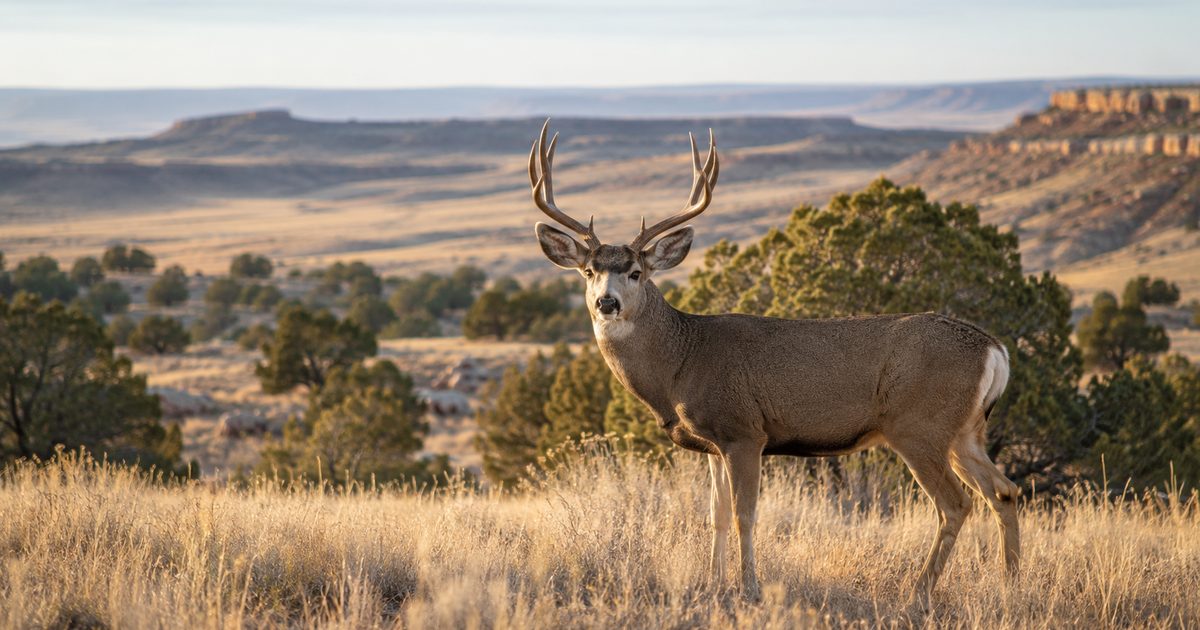
Nevada and Idaho represent two fundamentally different models for western mule deer hunting. Nevada is all-draw, all the time — every mule deer tag requires entering the draw, and the Great Basin genetics behind that system produce exceptional deer. Idaho has OTC general tags available in most units right now, with premium controlled hunts accessible through a preference point draw. One state requires patience; the other lets you hunt this fall. The choice depends on your timeline and what kind of experience you’re after.
There’s no wrong answer here. But hunters who apply for Nevada without understanding what they’re committing to — and hunters who write off Idaho because they assume the general-tag deer aren’t worth chasing — both leave opportunity on the table.
Nevada’s All-Draw Genetics
Every Nevada mule deer tag requires a draw. No exceptions. The bonus point system means accumulating points annually improves your odds, but zero-point applicants have non-zero odds in some units. That’s a meaningful distinction from Wyoming’s preference system, which effectively locks out anyone without a significant point bank in its premium units.
What the all-draw structure produces is straightforward: higher average age structure, less hunting pressure per unit, and deer genetics that haven’t faced the same annual harvest intensity as most OTC states. Bucks that survive to 4.5 and 5.5 years old look dramatically different from 2.5-year-olds. The all-draw system is why Nevada consistently produces 170–200+ B&C bucks in the premium units. It’s not magic — it’s controlled harvest and age structure protection compounding over decades.
The Nevada units that get the most attention from trophy hunters are the northeastern ranges: the Ruby Mountains, the East Humboldt Range, the Independence Mountains, and the Tobin Range further south. These mountain ranges rise from the Great Basin floor to 10,000-plus feet, creating the water, nutrition, and cover combination that produces heavy-antlered deer. The Ruby Mountains unit is Nevada’s benchmark — it’s the tag that generates the most applications and the most consistent 180–200+ inch bucks.
Nevada’s deer season structure also matters. Many of the premium units run short seasons — five to nine days — which keeps overall harvest impact low even in years with favorable draw odds. A short season in quality country is a different hunt than a month-long general season in a state with liberal OTC access.
The honest cost of Nevada is time. Not one or two years. For the premium northeastern units, nonresidents are looking at 7–15 bonus points to draw with reasonable probability. That’s a 7–15 year timeline if you start from zero today. Hunters who began accumulating Nevada points in 2018 are now positioned for the middle-tier units. The hunters drawing Ruby Mountains tags this fall started building in the early 2010s.
Idaho’s General Tag Access
Idaho nonresident general deer tags are OTC purchases — no draw, no points, available online. The general tag is valid across the majority of Idaho’s hunting areas, including significant portions of the Salmon River country, the Clearwater drainage, and the rolling sage hills of southwest Idaho. You can have a general tag in hand this week if you want one.
The hunting reality behind that tag is more varied than the simple “OTC access” framing suggests. Idaho’s deer herd quality ranges dramatically by region and habitat type. The heavily timbered units of northern Idaho — cedar and fir country with limited glassing range — require a very different hunting approach than the open canyon country of the central Salmon River drainage or the desert-edge terrain in the southwest. Hunters who show up expecting classic open-country glassing in Idaho’s north zone frequently struggle.
General tag Idaho mule deer run 140–175 B&C in typical OTC country. That ceiling goes up in lower-pressure areas. The Salmon River canyon system, accessible on the general tag, produces genuinely good mule deer in the broken sage and mountain-mahogany terrain along the river and its major tributaries. Southwest Idaho’s rolling hills and desert-edge country carry a huntable population with mature bucks in the better drainages.
Idaho’s controlled hunt draw — running through a preference point system — accesses the premium units: the Owyhee country, the Salmon River Mountains, and the upper Salmon basin. These units produce deer in the 160–185 B&C range. The point requirements for Idaho’s best controlled hunts are lower than Nevada’s premium units for comparable deer quality, which makes Idaho’s draw system more accessible on a mid-length timeline.
Idaho's General Tag Is One of the West's Best Starting Points
Idaho’s general deer tag is one of the most accessible OTC mule deer options for nonresidents in the West. Buy online, hunt this fall, build familiarity with Idaho’s terrain and drainage systems while simultaneously applying for Idaho’s controlled hunts. The dual-track approach — hunting on a general tag while accumulating points for premium draws — means you’re getting field time every year instead of waiting out a long draw timeline with no hunting to show for it.
Trophy Quality Comparison
Nevada’s premium draws produce bucks in the 175–200+ B&C range with real consistency. The Ruby Mountains unit averages better than almost anywhere else in the West. Idaho’s best controlled hunt country runs 160–185 B&C. The quality ceiling is higher in Nevada — that’s the honest answer.
But the comparison gets more interesting in the middle tier. A mature Idaho general-tag buck from lower-pressure Salmon River country can match or exceed an average Nevada draw-unit buck. The difference isn’t always as dramatic as the numbers suggest. What Nevada’s system guarantees is a floor — the age structure protection means even an average Nevada draw buck is older and more developed than a typical OTC buck from most western states.
Idaho’s general tag country sits closer to what you’d find in a mid-tier Colorado GMU or Wyoming’s general elk country: legitimate opportunity with real variance. The best bucks are there. Finding them requires more work than a Nevada draw unit where deer-per-square-mile and average age both favor the hunter.
The other factor is predictability. A hunter who draws a Nevada premium unit tag knows roughly what kind of deer are in that country before they ever leave home. Idaho’s general tag requires more homework — identifying the specific drainages and terrain features in a given unit that hold the better bucks, which varies by year with weather and range conditions.
Cost Comparison
The math here is less complicated than it looks. Nevada nonresident: $142 license plus $114 deer application fee equals $256 in annual costs before you draw a tag. If you draw in year eight, you’ve spent $2,048 in application costs plus $142 for the actual tag. Idaho nonresident general deer: $35 license plus $171 deer tag equals $206 total, no draw required.
Run the same comparison over five years. Five years of Nevada bonus point accumulation — without drawing — costs over $1,280 in application fees. Five years of Idaho general-season hunting costs approximately $1,030 total, with a deer hunt to show for each of those years. The Nevada investment is building toward something; the Idaho investment is paying for actual hunting.
The controlled hunt scenario in Idaho changes the calculus slightly. Idaho preference points cost approximately $15 per year for nonresidents. A 5–7 year build puts you in range of several quality controlled hunt units, at a fraction of Nevada’s point accumulation cost. For hunters who want premium deer country without a decade-plus wait, Idaho’s controlled hunt system is worth understanding seriously.
Nevada Bonus Points Don't Guarantee Anything
Nevada’s bonus point system — unlike Wyoming or Colorado preference points — doesn’t guarantee a draw at any specific point level. It improves your probability. A hunter with 10 Nevada bonus points has meaningfully better odds than a hunter with zero, but isn’t guaranteed to draw in any given year. The probability improvement is real but not deterministic. Budget for a longer Nevada timeline than a simple “10 points equals 10 years” calculation suggests. Some hunters with 12 points still wait two or three additional years for premium units.
Terrain Differences
Nevada mule deer country is Great Basin terrain: open sage flats, rocky mountain ranges rising from the basin floor, dry canyon systems, and limited timber cover. The glassing-and-stalking approach works uniformly well across Nevada’s hunting units. You drive to an elevated position, glass the terrain below at first light, identify a buck at distance, plan your approach. The basin terrain makes the whole sequence clean and repeatable.
Idaho mule deer country doesn’t have a single character. The timbered north — unit zones across the Clearwater drainage and Panhandle country — is dense cedar and pine with limited long-range glassing. You’re hunting close, calling, and still-hunting through timber. The central canyon country opens up considerably; the Salmon River breaks give you glassing terrain more similar to Nevada’s character. Southwest Idaho’s rolling sage hills closely resemble Nevada’s mid-elevation basin terrain and suit the same spot-and-stalk approach.
That terrain variety is either a feature or a complication depending on your hunting style. If you prefer the certainty of open-country hunting — wake up, glass, find a buck, stalk — Nevada’s terrain is more consistent from unit to unit. If you want the option to hunt different country in different years, Idaho’s regional variety gives you that. The same general tag can put you in timbered canyon country one year and sage-and-rimrock the next.
Application Strategy
The most effective approach combines both states. Apply for Nevada bonus points starting now. Every year you don’t draw Nevada, you’re building. Buy an Idaho general tag and hunt this fall — the Salmon River drainage, the central Idaho canyon country, or the southwest sage hills. Apply for Idaho’s controlled hunts simultaneously, accumulating preference points toward the premium draw units.
Run the Nevada draw timeline in the Draw Odds Engine for your target unit. A unit-specific projection will tell you whether you’re looking at a 7-year window or a 12-year window for a given Nevada tag, which shapes how aggressively you should prioritize Idaho’s controlled hunts as a parallel track. Track your points in both states through the Preference Point Tracker.
After 5–7 years on this approach, you’re actively drawing Idaho controlled hunts and within striking range of Nevada’s middle-tier premium units. The Idaho controlled hunt gives you a 160–175 B&C hunt in the near term while Nevada’s bonus point bank continues to grow toward the premium draw. It’s a more satisfying timeline than waiting 10-plus years with nothing to show for the annual application fees.
For current draw odds by unit in both states, check the Nevada draw odds and Idaho draw odds pages before submitting your applications. Odds shift year to year with applicant pressure — the unit that drew at five points last year might require seven this year if a hunt report went viral in October.
Start both applications. Hunt Idaho this fall. Let time do the work in Nevada.
Next Step
Check Draw Odds for Your State
Tag-level draw odds across 9 western states — filter by species, unit, weapon, and points. Free to use.
Get the Insider Edge
Join hunters getting exclusive draw odds data, gear deals, and weekly hunt planning tips.
Related Articles
Arizona OTC Archery Deer 2026: Unit Limits and Closures
Arizona's OTC archery deer season opens August 21, 2026 — and units close the moment harvest limits fill. Here's every unit's limit, plus the best bets by real archery success rates.
Colorado OTC Elk in 2026: What Changed for Nonresidents
Colorado eliminated unlimited nonresident OTC archery elk west of I-25 for 2026 — and Gunnison rifle tags went draw-only. Here's exactly what's still on the shelf and how to hunt this fall anyway.

Colorado Reissue Licenses: How to Grab Returned Elk Tags
Every Wednesday through fall, CPW sells back surrendered limited licenses — including elk tags nonresidents can't get any other way in 2026. Here's the Tuesday-Wednesday ritual that actually lands one.
No comments yet. Be the first to share your experience!