Mule Deer vs. Whitetail: What Eastern Hunters Need to Know Before Going West
How mule deer hunting differs from whitetail hunting. Terrain, behavior, tactics, equipment, and the mental adjustments that eastern hunters need to make for their first mule deer hunt in the West.
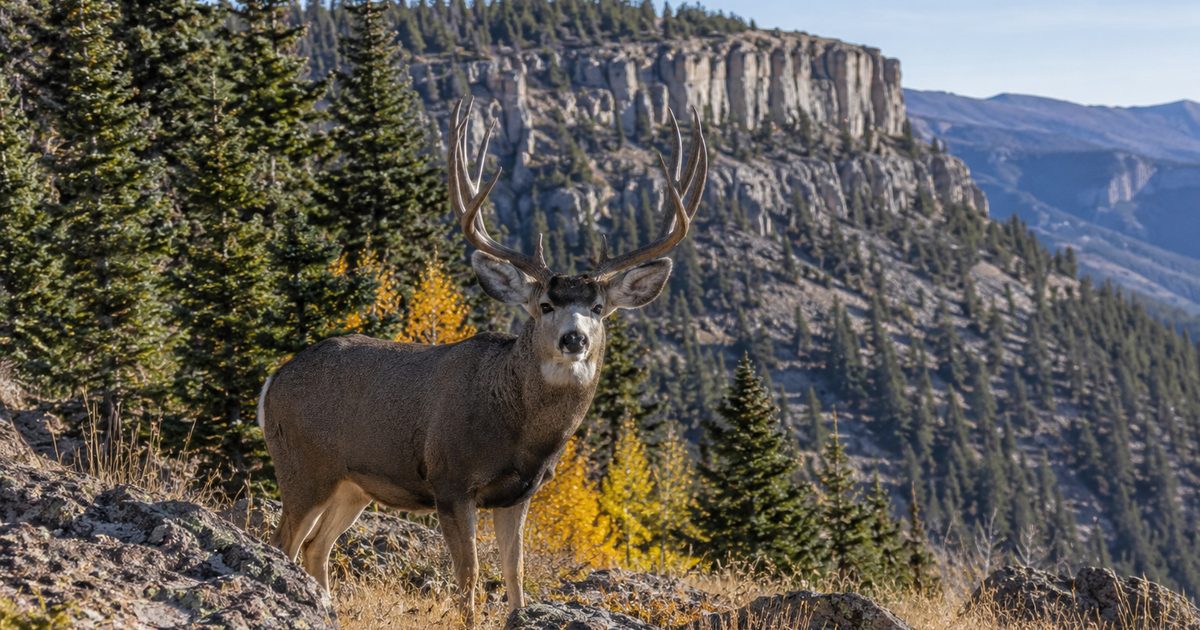
The hunter who hunts whitetail well doesn’t automatically hunt mule deer well — and vice versa. The skills overlap partially. Terrain, animal behavior, tactics, and equipment demands are different enough that transitioning from an eastern whitetail woods hunt to a western mule deer canyon hunt requires conscious adjustment. This isn’t discouraging — mule deer hunting is accessible to motivated hunters from any background. Think of it as an honest roadmap.
Terrain: The Fundamental Difference
Whitetail habitat is typically forest, agricultural edge, and hardwood bottom. Visibility from a stand runs 50–200 yards. You’re waiting for a deer to walk into range.
Western mule deer terrain is open canyon country, sage and pinyon, alpine timber, or high desert — with visibility that stretches 500–1,500 yards. The hunt isn’t waiting for a deer to appear. It’s finding one from far away and making a plan to close the distance.
That single shift changes almost everything about preparation, equipment, and tactics.
The Core Tactical Shift
The stand hunter’s entire playbook — find sign, set up, wait — doesn’t port to mule deer country. The default western tactic is glass-and-stalk: locate a buck from a distance, then execute an approach. Knowing this before the hunt changes how you train, what gear you buy, and what skills to practice.
Stand Hunting Doesn’t Translate
The whitetail hunter’s instinct is to find sign, set up, and let the deer come to you. Mule deer don’t funnel through bottlenecks the same way. Their home ranges are larger, and their movement patterns track forage availability and elevation more than fixed travel corridors.
A ground blind or treestand at a water source can work. It’s genuinely effective in hot, dry conditions when deer are hitting water regularly. But it’s not the default tactic — it’s situational.
The default tactic is spot-and-stalk: glass a high point, locate a buck, then close the distance. That skill takes time to develop, especially for hunters conditioned to waiting for deer. The first few western hunts often produce botched stalks. That’s not failure — that’s the learning curve.
Scent Management: Same Problem, Different Scale
Whitetail hunters are typically meticulous about scent — cover sprays, scent-eliminating detergent, careful wind positioning. Mule deer are also scent-sensitive, but open terrain changes the problem in ways that no spray can solve.
Rolling thermals in canyon country create wind eddies and reversals that are nearly impossible to predict perfectly. You can’t out-spray the terrain. Western mule deer hunters instead rely on distance — staying downwind at 400+ yards during an approach — rather than relying on scent elimination products at close range.
Scent control still matters. It’s just not the primary variable it is in a whitetail timber hunt.
Equipment Differences
Optics
This is the biggest gear gap for eastern hunters. A whitetail hunter runs a rifle scope and maybe a quality binocular. That’s enough for the timber.
For mule deer, you need quality binoculars (10x42 minimum), a spotting scope (20–40x on a tripod), and a rangefinder. The glass setup often costs as much as or more than the rifle itself. It’s not optional for serious western hunting — you’re covering country visually before you ever move your feet.
Rifle and Caliber
The caliber requirements aren’t drastically different from any medium-large game hunting, but extended-range capability matters more when you’re hunting open country from a stand-hunting background. A 6.5 Creedmoor, .270 Win, or 7mm Rem Mag zeroed at 200 yards handles the distance reality of western mule deer terrain. You don’t need to shoot 500 yards to be successful — but you need to be able to.
Footwear
Rubber boots for marsh and timber don’t work in western mule deer country. You need hiking boots with ankle support for steep, rocky terrain. The footwear shift reflects a broader physical reality: western mule deer hunting is harder on your body than most eastern deer hunting, just in a different direction.
Behavioral Differences
How They React to Pressure
A spooked whitetail runs hard and doesn’t stop. That buck is done for the day. A spooked mule deer often runs 200–300 yards, then stops and looks back at the threat. It’s a behavior pattern called stotting, and it’s one of the most important things an eastern hunter can learn before their first western trip.
A mule deer that bolted at 100 yards and stopped at 300 is often still huntable. Back off, circle downwind, regroup. Don’t write off a deer just because it moved.
The Look-Back Window
When a mule deer spooks and stops, it’s evaluating the threat — not necessarily committing to a full retreat. If you freeze immediately when a deer spots you and it stops at distance, you may have time to assess whether the stalk is still viable. Whitetail reflexes — breaking off and heading home — cost hunters good mule deer bucks every season.
Mule Deer Curiosity
Mule deer sometimes stand and watch a moving threat rather than bolting. Hunters who spot a deer and freeze, waiting it out, can find themselves in a staring contest that lasts several minutes. Sometimes the right play is to back off immediately rather than trying to outlast the deer’s attention.
The instinct to out-sit a mule deer that’s already looking at you doesn’t always pay off. Read the deer — a relaxed animal that glances up briefly is different from one that’s already locked onto you with ears forward and body tense.
The Rut
Mule deer rut in late October–November, depending on elevation and location. Timing overlaps with whitetail rut in many regions. Rutting bucks exhibit recognizable behavior — reduced caution, visible daytime movement, following does. Calling works during the mule deer rut, though with less consistency than elk calling.
Rattling and grunt tubes produce responses from rutting mule deer bucks. It’s not as reliable as whitetail rattling in pressured country, but it’s real. The rut is legitimately the best time to be in the field for mule deer — that part translates directly.
Water Sources: The Western Equivalent of the Stand
In hot, dry conditions — particularly early-season archery or early rifle hunts in September and October — water sources become the most reliable ambush point available. Mule deer in desert and semi-arid terrain hit water with predictable regularity when temperatures are high.
Water as Your Whitetail Stand
If you’re struggling to adapt your stand-hunting instincts to western country, find water. Tank blinds, creek crossings, and developed water sources in dry units function like the best funnels in eastern deer hunting — deer come to them on a schedule. It’s not the most exciting tactic, but it’s devastatingly effective in the right conditions.
A ground blind or simple setup within shooting range of a reliable water source in a dry unit can produce consistent deer activity when glassing and stalking aren’t working. That’s not a fallback — it’s a legitimate tactic that experienced western hunters use without apology.
The Physical Demands Gap
This is where the transition gets humbling. Western mule deer hunting requires miles per day, meaningful elevation change, and — if you kill a buck in canyon country — a pack-out that reminds you exactly why you’ve been avoiding the gym.
Eastern hunters who are in woods shape but not mountain shape discover the difference quickly. Sitting in a stand and walking to and from a treestand twice a day doesn’t build the aerobic base or leg strength for eight-mile days in broken terrain.
Mountain Fitness vs. Woods Fitness
Being in good shape for whitetail hunting — which is mostly sitting — doesn’t translate to western mule deer terrain. Hunters who show up undertrained lose hours of prime hunting time recovering, move slower during stalks, and risk injury on descent. Start a deliberate fitness program at least 8–12 weeks before the hunt, focused on weighted carries and elevation gain.
The physical preparation gap is more significant than any tactical or equipment gap. You can borrow a spotting scope. You can’t borrow a fitness base in the final two weeks before the hunt.
What Actually Transfers
The news isn’t all adjustment. A lot of what makes a skilled whitetail hunter carries west.
Wind reading transfers — thermals behave differently, but the instinct to stay downwind before moving is the same. Patience transfers — the hunter who can sit still and wait out a situation is better at long stalks than someone who gets jumpy. Trigger discipline and shot confidence transfer directly. And the habit of studying maps and reading terrain, which serious whitetail hunters do obsessively, translates well to identifying mule deer habitat from a topo.
You’re not starting over. You’re adding a chapter.
For more detail on the spot-and-stalk method, read mule deer spot-and-stalk tactics. For unit scouting before your first western tag, see how to scout mule deer.
Next Step
Check Draw Odds for Your State
Tag-level draw odds across 9 western states — filter by species, unit, weapon, and points. Free to use.
Get the Insider Edge
Join hunters getting exclusive draw odds data, gear deals, and weekly hunt planning tips.
Related Articles
Arizona OTC Archery Deer 2026: Unit Limits and Closures
Arizona's OTC archery deer season opens August 21, 2026 — and units close the moment harvest limits fill. Here's every unit's limit, plus the best bets by real archery success rates.
Colorado OTC Elk in 2026: What Changed for Nonresidents
Colorado eliminated unlimited nonresident OTC archery elk west of I-25 for 2026 — and Gunnison rifle tags went draw-only. Here's exactly what's still on the shelf and how to hunt this fall anyway.
Colorado Reissue Licenses: How to Grab Returned Elk Tags
Every Wednesday through fall, CPW sells back surrendered limited licenses — including elk tags nonresidents can't get any other way in 2026. Here's the Tuesday-Wednesday ritual that actually lands one.
No comments yet. Be the first to share your experience!