Montana Turkey Hunting: Merriam's in the Missouri Breaks and Eastern Ponderosa
Montana turkey hunting — Merriam's subspecies, spring license system, best hunting districts, and the unique experience of hunting gobblers in big sky ponderosa pine country.
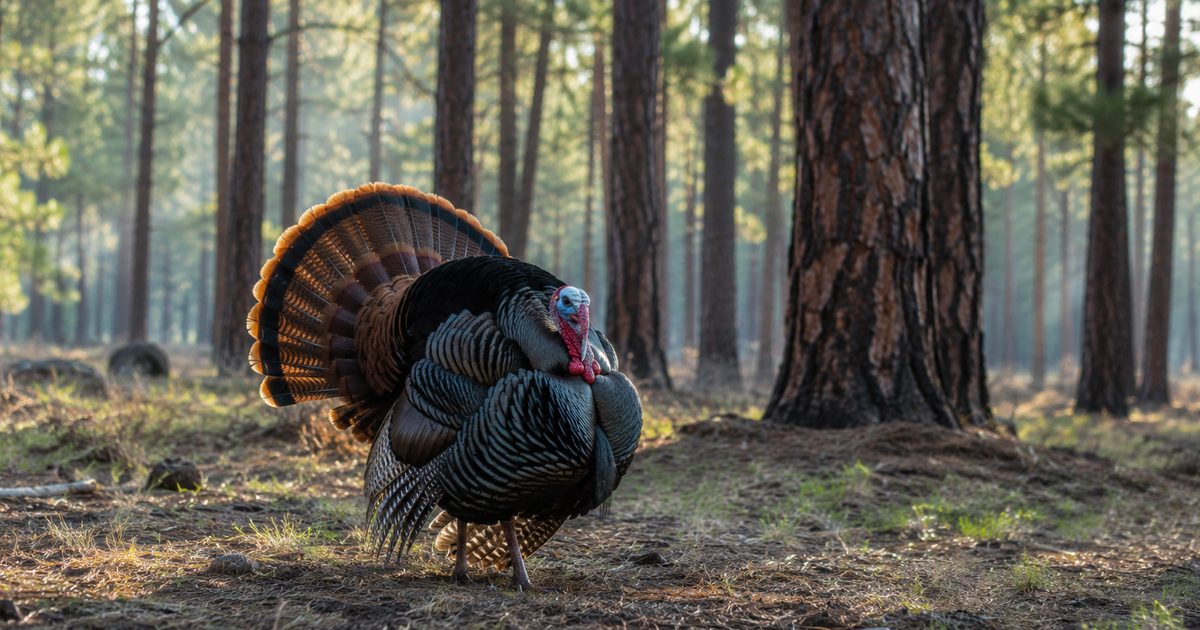
Montana doesn’t require a draw for turkey. That single fact separates it from almost every other western state worth hunting for Merriam’s, and it’s the first thing you need to know when you’re building a western turkey schedule. Buy the license, pick a unit, and go. No application windows, no preference points, no waiting on results in April while you watch the season open without you.
The birds are Merriam’s. The country is big. And the combination of over-the-counter access with legitimate public land opportunity makes Montana one of the most practical western turkey states for nonresident hunters who want a genuine mountain gobbler experience without fighting a draw system to get it.
No Draw, No Wait: The Montana Advantage
Most western states with Merriam’s turkey — Wyoming, New Mexico, Oregon, parts of Colorado — require some form of draw for spring turkey tags. Montana operates differently. Spring turkey hunting licenses are OTC, available to residents and nonresidents alike through Montana FWP’s online system or from any license dealer.
OTC License — No Draw Required
Montana spring turkey licenses are over the counter. There’s no draw, no application deadline, and no preference points. You buy the license online and hunt. This is a genuine advantage over most western Merriam’s states and makes Montana a reliable fallback if you miss other state draws.
The nonresident spring turkey hunting license runs approximately $101. That’s your all-in cost beyond travel — no additional fees, no tags to draw. For a nonresident hunting multiple western states in a spring season, Montana’s OTC system makes it easy to add as a standalone trip or build around other licenses.
Fall turkey is also available in most hunting districts on an OTC basis, with both archery and rifle seasons depending on the district. The fall system mirrors the spring setup — buy a license, hunt your district.
Where Montana Merriam’s Live
Montana’s turkey population is concentrated in the eastern half of the state, where ponderosa pine breaks along major river systems provide the roosting timber and creek-bottom feeding habitat that Merriam’s use. The Flathead Valley and Bitterroot Valley in western Montana hold scattered populations, but the core of the state’s turkey hunting is east of the Divide.
Yellowstone River Corridor (Southeastern Montana): The Custer/Gallatin National Forest country along the Yellowstone from Billings eastward through the Miles City area is the most accessible and widely hunted Merriam’s habitat in Montana. Ponderosa pine drainages cut down from the rimrock to the river bottom, and birds use the transition zones between agricultural land, cottonwood creek bottoms, and the pine breaks above. This stretch is relatively close to the interstate corridor, which means hunting pressure is real on opening weekend — but the country is big enough that birds are available away from easy access.
Missouri River Breaks (Central Montana): The breaks country north of Lewistown and east toward Jordan is where Montana turkey hunting becomes something different from what most hunters imagine. Isolated ponderosa drainages drop toward the Missouri through miles of badland rimrock and prairie — the same country that Lewis and Clark documented in their journals, the same terrain where the northern Great Plains transition from plains to breaks. Access requires planning. You’re looking at BLM ground that can take a significant drive down two-track roads to reach, and once you’re there you’re hunting a landscape that doesn’t look like turkey country until you find the timber.
Bighorn River Corridor: The area between Billings and the Wyoming border along the Bighorn River holds birds in the ponderosa and juniper drainages. Less pressure than the Yellowstone corridor, similar habitat structure.
How Montana Merriam’s Hunt
Merriam’s in big open country behave differently from the timber birds of the eastern United States. These turkeys cover more ground. A dominant tom in the breaks might work a two-mile stretch of creek drainage through a morning, strutting in field edges and creek bottoms before moving to midday roosting areas. You can’t just sit and wait for them the way you’d set up on a whitetail trail — you need to be mobile and willing to cover ground to find where birds are actively working.
Missouri Breaks: The Most Authentic Montana Turkey Experience
The Missouri River Breaks ponderosa drainages north of Lewistown represent Montana turkey hunting at its best — isolated country, low hunting pressure, and Merriam’s gobblers that haven’t been educated by easy-access pressure. Plan extra drive time to get off the maintained roads and you’ll find birds that respond aggressively to calls.
Aggressive calling works well early in Montana’s spring season, typically mid-April through the first week of May. Toms in open ponderosa country respond to loud yelping and cutting across distances that would be unusual in dense hardwood timber. Running and gunning — moving until you get a shock gobble response, then setting up quickly — is more effective than blind calling from a fixed position.
Field-edge strutting zones along creek bottoms are the primary setup locations. Find a crossing where birds moving between roost timber and feeding ground have to funnel through a pinch point, and you’ve found a spot that will produce mornings after morning during the peak two weeks of the season.
The Missouri Breaks Experience
Hunting turkeys in the Missouri River Breaks deserves its own discussion because it’s genuinely unlike anything else in western turkey hunting. You’re in badland country — eroded buttes, ponderosa-filled coulees, rattlesnake-flat prairies — that opens into river breaks thick enough to hold elk. Lewis and Clark spent weeks moving through this exact terrain in the early 1800s, documenting the wildlife in notes that still read as accurate descriptions of what hunters find there today.
Gobblers in the breaks work the same creek systems, drink from the same seeps, and roost in the same ponderosa pine drainages that have defined the landscape for generations. It’s not a small-acreage hunt near town. You’re covering miles of BLM ground with a pack on your back and a call in your vest, looking for birds in country where pronghorn are running the rimrock a quarter mile away and mule deer flush from the junipers ahead of you.
That context — the scale of the country, the mix of species, the genuine remoteness of the better access points — makes a Montana turkey trip feel like a bigger adventure than the species usually suggests. Bring it seriously.
Season Structure and Timing
Montana’s spring turkey season runs mid-April through mid-May — a roughly four-week window that covers the most productive portion of the Merriam’s breeding cycle in the northern latitudes. The season opens when toms are vocal and birds are fully in breeding mode.
The peak two weeks run from opening day through about May 1st. Mornings start cold — freezing temperatures are normal in mid-April across eastern Montana, and snow is possible — but birds are active and responsive before the temperature swings of midday. The classic pattern is roosted birds gobbling before first light, flying down to strut and call in the first hour of morning, then moving to midday areas by 9 or 10 AM.
Late in the season (first two weeks of May), the gobbling slows as hens go to nest and the peak breeding activity winds down. Hunting is still productive but requires more patience and different timing — midday birds moving back toward roost areas can be caught in early afternoon.
Fall turkey seasons are available in most eastern Montana hunting districts on both archery and rifle. Fall seasons don’t overlap with the spring peak but give hunters another opportunity, particularly for those already in Montana for fall big game.
Big Country Turkey Gear for Montana
Montana Merriam’s hunting covers serious ground. Bring a lightweight spotting scope — glass drainages and creek edges from high points before committing to a move, the way you’d glass for elk. Long-distance calling with a box call or slate carries across the open breaks better than short sequences in the timber. Layered clothing that handles 25-degree mornings and 60-degree afternoons is a necessity, not an option. Boots built for miles on broken terrain, not a short walk from a truck, are the right choice for the breaks country.
Planning Access in Montana Turkey Country
Montana’s BLM ground in turkey country is genuinely accessible, but “accessible” doesn’t mean easy to find or navigate. The better ponderosa drainages in the breaks require using USGS maps or onX-style mapping to identify the patchwork of BLM, state, and private ground before driving four hours from Billings only to find a locked gate.
onX Maps Montana layer is the practical tool for this. Identify creek drainages with ponderosa cover, confirm BLM ownership of the drainage bottom and slopes, and look for access routes that don’t cross private. The Missouri Breaks BLM around the Jordan, Winnett, and Lewistown areas has substantial public ground that hunting pressure hasn’t concentrated on yet — largely because you have to put real effort into getting to it.
The Custer National Forest units along the Yellowstone are easier to access and better documented, making them the default starting point for a first Montana turkey trip. Plan to move into the breaks country once you’ve had a season to understand Montana Merriam’s country better.
Why Montana Turkey Is Worth Scheduling
Western turkey hunters spend a lot of time thinking about New Mexico, Kansas, and Nebraska for Merriam’s and Rio Grande birds. Montana rarely comes up in that conversation, which is largely a marketing gap rather than a quality gap. The OTC license removes the draw barrier, the public land is extensive, and the big-sky Merriam’s experience in the ponderosa breaks is something different from any other state.
If you’ve been waiting on New Mexico or Wyoming draw tags, schedule Montana as an every-year hunt instead. The tags are available when you want them, the season timing lines up with peak spring conditions, and the Missouri River Breaks country specifically offers one of the most unique turkey hunting contexts in North America.
Check Montana draw odds for any species-specific context, and run your full western season through the Draw Odds Engine to build a schedule that fits your timeline.
Sources & verification
Seasons, license fees, application windows, and draw structure for Montana change every year. Always verify the current details against the official Montana agency before applying or hunting.
- Montana Fish, Wildlife & Parks — fwp.mt.gov
Next Step
Check Draw Odds for Your State
Tag-level draw odds across 9 western states — filter by species, unit, weapon, and points. Free to use.
Get the Insider Edge
Join hunters getting exclusive draw odds data, gear deals, and weekly hunt planning tips.
Related Articles

Western State Draw Systems Explained
How all 9 western state hunting draw systems actually work — preference points, bonus points, and pure lotteries compared side by side with real odds data.

Arizona Bighorn Sheep Draw Odds Guide
Arizona bighorn is the definition of a lifetime tag. Here's the point math, unit breakdown, and why you apply every year regardless of your bonus point total.

Arizona Fall Turkey Draw Odds Guide
Arizona fall turkey is a low-point draw in the ponderosa country. Here's the unit breakdown, typical point requirements, and how to stack it with other Fall Draw applications.
No comments yet. Be the first to share your experience!