Montana Swan Valley Elk Hunting: Roosevelt Country at Rocky Mountain Latitude
Montana's Swan Valley elk hunting — the west-of-the-divide districts, massive bulls, general tag access, wilderness approach routes, and why this corner of northwest Montana is overlooked relative to its quality.
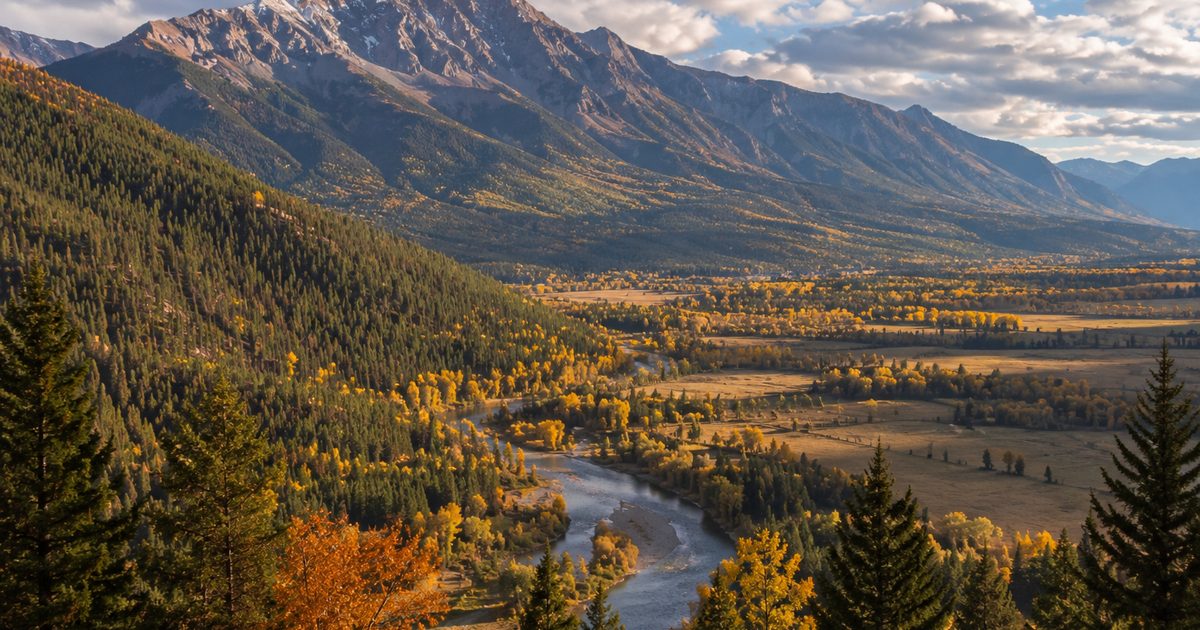
The Swan Valley in northwest Montana sits between the Swan Range to the east and the Mission Mountains to the west, running roughly 60 miles from Swan Lake in the north toward the Bob Marshall Wilderness complex in the south. It’s wet country by Montana standards — western larch, Douglas fir, lodgepole pine, and cedar drainages that feel more Pacific Northwest than high-plains Rocky Mountain. The elk here grow heavy on that diversity. This isn’t sagebrush country. These aren’t open-country elk.
Hunters who come from Missouri Breaks backgrounds or open-country mule deer experience show up in the Swan expecting to glass ridges and make long shots on elk feeding in meadows. That’s not how it works here. Swan Valley elk are timber elk — they live in the trees, they hide in the timber, and hunting them requires a different set of skills than what most western hunters develop. Getting that adjustment right is most of the battle.
The Hunting Districts
The Swan Valley falls primarily within hunting districts 101, 102, 150, and 151, covering portions of Lake, Lincoln, and Flathead counties. The Bob Marshall Wilderness forms the eastern boundary of the valley; the Mission Mountains Wilderness occupies the western slopes above the valley floor. Between those two wilderness designations, the Flathead National Forest provides the bulk of accessible public ground.
District 101 covers most of the Swan Valley floor and the lower-elevation drainages. District 150 and 151 push into the higher terrain toward the Bob Marshall boundary. Each district has its own season structure and regulation nuances — pull the Montana FWP regulation book and read the specific season dates, as they can differ from neighboring districts.
The terrain is dissected by drainages running east-to-west off the Swan Range: Soup Creek, Piper Creek, Cold Creek, Lion Creek, Rumble Creek, Fatty Creek, and a dozen others. Each of these systems has public access at or near the trailhead, with the productive backcountry elk habitat starting 3-6 miles in where the trail gets rough and the weekend pressure falls off.
General Tag Access: What Montana Offers
Montana’s general elk license system is one of the most accessible frameworks for nonresident elk hunters in the West. The combo license (which covers both deer and elk for general season districts) runs approximately $1,000 for nonresidents — a significant cost, but no draw lottery, no multi-year point accumulation, no waiting.
The Swan Valley general season districts are exactly that: buy the tag, hunt the country. There are no special permits required for most seasons in HDs 101, 102, 150, and 151. That means a nonresident hunter can plan a Swan Valley elk trip on a one-year timeline without needing to build a points history first.
Use the Montana draw odds to verify current tag structures for these districts and check whether any special permits apply to specific seasons or portions of the units you’re targeting. The general framework is stable year to year, but regulations can change.
Montana Combo License vs. Special Permits
The Montana combination license covers deer and elk in general season districts — that’s the Swan Valley for most seasons. You don’t need special draw permits for general districts. However, some drainages border wilderness areas where additional rules apply, and some antlerless elk seasons require separate permits. Read the regulation book for your specific district before assuming your combo license covers everything.
Bull Quality: Mass Over Score
Swan Valley bulls run heavy. The nutrition in this country — wet forest with high-quality browse, diverse understory, and good water — produces elk with exceptional body size and beam mass. A mature 5x5 out of the Swan might gross lower in total score than a Gunnison Basin 6x6 with long, wide tines, but pick up both antlers and you’ll notice the difference immediately. The mass and beam diameter on these elk is often superior.
Boone & Crockett class bulls exist in this country. They’re not common — they’re never common — but they’re legitimate with patient hunting and the willingness to pass young bulls early in the season. The average mature bull here isn’t the wide-racked, long-tined animal you see in Colorado or Wyoming country. He’s a thick, heavy, dark-antlered animal that looks like he belongs in the Pacific Northwest, which in a sense he does.
The challenge isn’t finding elk. There are elk in the Swan. The challenge is finding them when the timber cuts your visibility to 30-40 yards and every sound in the forest could be a bull or a branch falling. This country rewards hunters who can close distance quietly through dense vegetation — it’s not a country for impatient hunters.
Hunting Dense Timber: Calling, Still-Hunting, and Ambush
Open-country elk tactics don’t translate to the Swan. Let go of that approach before you arrive.
What works here is a combination of run-and-gun calling during the September rut, careful still-hunting through old-growth larch and fir on calm mornings, and ambushing travel corridors along creek drainages during feeding and bedding movements. The rut in big-timber country is vocal and intense — bulls in dense forest bugle with urgency because they can’t see their competition. A satellite bull that can hear a rival but can’t see him will often close aggressively to a well-placed bugle.
Calling in Timber vs. Open Country
Don’t stop at a single bugle and wait. In open country, you can see whether a bull is responding. In the Swan’s timber, you can’t see 50 yards, so you’ll hear him working through the trees before you see him. Keep calling on a natural sequence — challenge bugle, cow mews, silence — and be ready to shoot fast when he appears. Encounters are sudden and close.
The closing-distance problem is the hardest part. You can have a bull fired up and working toward you at 80 yards, bugling every 30 seconds, and never get a clean shot because the timber never opens. That’s this country. Still-hunting — moving slowly and deliberately through the timber on calm-wind mornings, pausing to listen, reading sign — produces a different type of encounter that the callers-only hunters miss.
Creek drainage ambushes are productive in October. Elk move predictably along the drainages when morning thermals are running and evening shadows hit the canyon walls. Find the trail crossings on the creek banks, pick a tree stand or ground blind position, and wait. It’s less exciting than calling, but it fills tags in country that turns vocal bulls nocturnal after the first week of pressure.
Access Points and Road Structure
US Highway 83 runs the Swan Valley from north to south, making the valley floor accessible by vehicle for the entire length. That’s both an advantage (easy access to trailheads) and a limitation (everyone else can access it too). The road-accessible terrain at the valley floor sees the most pressure.
The productive elk country is in the drainages. Soup Creek Road, Lion Creek Road, Piper Creek, and several other forest service roads lead to trailheads where the foot travel begins. Most of the serious backcountry elk habitat starts 3-5 miles up the drainage from the trailhead — that’s where the weekend hunters turn back, and that’s where the elk learn to live.
From Missoula, the Swan Valley is approximately 70 miles northeast via Montana Highway 200 and then north on US-83. From Kalispell, it’s about 50 miles southeast. Bigfork and Condon are the closest small communities with limited services. Missoula and Kalispell are the practical supply and staging hubs.
Mission Mountains Wilderness: The Western Boundary
The Mission Mountains Wilderness is the western wall of the Swan Valley. It’s the reverse approach to the Swan Range terrain — steep, dramatic, and managed under wilderness rules.
If your hunting takes you onto the western slopes and inside the Mission Mountains Wilderness boundary, a tribal recreation permit is required for land within the Flathead Indian Reservation boundary (which includes portions of the western Mission Mountains). This is not the same as a standard national forest wilderness permit — it’s a separate tribal permit required for hunting on tribal lands. Know exactly which side of that boundary you’re on.
Mission Mountains Tribal Boundary
Portions of the Mission Mountains west of the Swan Valley fall within the Flathead Indian Reservation. Hunting on tribal lands without a tribal recreation permit is a serious violation. The boundary is not always obvious on the ground. Study the maps carefully and obtain the required tribal permits from the Confederated Salish and Kootenai Tribes if your hunt takes you onto the western slopes.
The Flathead National Forest land between the two wilderness areas — the actual Swan Valley corridor — is open to standard national forest hunting rules with a general elk license.
Bob Marshall Wilderness: Eastern Approach from the Swan
The Bob Marshall Wilderness is the eastern boundary of the Swan Valley, and it’s worth addressing directly: the Swan Valley is the western approach to the Bob.
If you’ve read about Bob Marshall elk hunting, you’ve likely encountered the Sun River drainage approach on the eastern side, or the South Fork Flathead from the south. The Swan Valley drainages — Soup Creek, Lion Creek, and others that penetrate the Bob’s western edge — are less frequently discussed but provide legitimate access to the same wilderness. Some of the biggest bulls in this region summer deep in the Bob and push out into the Swan drainages as pressure builds in October and early November.
Swan Side vs. Sun River Side of the Bob Marshall
The Bob Marshall’s eastern approach (Sun River, Gibson Reservoir) puts you in more open, grassland-mixed terrain — better for glassing and longer shots. The Swan Valley’s western approach drops you into dense forest drainage country. Same wilderness, completely different habitat type and hunting style. Choose your approach based on which style of hunting you’re equipped for.
A full Bob Marshall wilderness hunt from the Swan side is a multi-day commitment — 8-15 miles in depending on the drainage, the same expedition logistics as any serious backcountry elk hunt. Horses are practical; DIY foot access is possible for hunters who are fit and willing.
Season Timing in the Swan
September archery is the high-water mark in the Swan Valley. The rut is active, bulls are vocal in the dense timber, and calling can produce close encounters that simply don’t happen once the guns come out and elk go nocturnal under pressure. The timber suppresses sound differently than open country — when a bull cuts the distance to 20 yards and you can hear him breathing before you see him, that’s a September Swan Valley moment that doesn’t come any other way.
October rifle brings more hunters and more movement. Elk pushed out of their September patterns by rifle openers will shift drainage systems and elevation. The first two weeks of October are the most productive for consistent elk contact; by late October, experienced elk have gotten quiet and cagey.
Late season — November — is worth considering if snow hits the high country early. Significant snowfall drives elk off the upper slopes and into predictable patterns in the lower drainages. Access becomes the real constraint: forest service roads close, creek crossings become hazardous, and the weather can shut down travel with little warning. But hunters willing to deal with those constraints can find concentrated elk in country they’d be impossible to locate in September.
What to Bring: Gear for Dense Timber Elk
Dense timber elk hunting demands specific gear choices that differ from open-country setups. You don’t need a 500-yard rifle here. Shot opportunities in the Swan’s timber are typically inside 100 yards, often 30-60. A flat-shooting cartridge matters less than a fast-handling rifle that shoulders quickly in a sudden encounter.
Camo matters differently in timber — you’re not breaking an outline on a ridgeline, you’re trying to disappear at 30 yards while a bull is working the wind through the trees. Good concealment in subdued forest patterns works better than high-contrast open-country patterns.
Scent control is non-negotiable. These elk are not the heavily pressured Missouri Breaks deer-sized pressure situations — but a bull at 40 yards in dead-calm timber air will catch human scent before he commits to the shot. Work the wind religiously and use every scent-management tool available.
Rubber boots are worth considering for the wet drainage bottoms in the Swan — in early October, the creek-bottom terrain can hold standing water and saturated soil for days after a rain event.
Building Your Swan Valley Elk Hunt
The Swan Valley is achievable for nonresident hunters on a reasonable budget relative to many western elk destinations. There’s no draw. The tag costs are fixed. The access is public land with public trailheads.
What it demands is preparation for a specific style of hunting that most hunters haven’t done. If you’ve hunted whitetail in timber, still-hunted grouse through dense spruce, or called elk in lodgepole — you have transferable skills. If your entire elk background is open-country glassing from Wyoming or Montana’s east side, plan on a significant learning curve.
Check current district structures and season dates against the Montana draw odds to confirm what’s general and what requires a draw. Load your point history into the Preference Point Tracker if you’re also considering limited entry Montana units alongside the general season approach.
The Swan doesn’t get the magazine coverage that Yellowstone elk country or the Missouri Breaks gets. That’s part of what makes it worth hunting.
Hunt district boundaries and season structures change year to year. Always verify current regulations with Montana Fish, Wildlife & Parks before purchasing licenses or planning access routes. Tribal land requirements are separate from state regulations.
Sources & verification
Seasons, license fees, application windows, and draw structure for Montana change every year. Always verify the current details against the official Montana agency before applying or hunting.
- Montana Fish, Wildlife & Parks — fwp.mt.gov
Next Step
Check Draw Odds for Your State
Tag-level draw odds across 9 western states — filter by species, unit, weapon, and points. Free to use.
Get the Insider Edge
Join hunters getting exclusive draw odds data, gear deals, and weekly hunt planning tips.
Related Articles

Western State Draw Systems Explained
How all 9 western state hunting draw systems actually work — preference points, bonus points, and pure lotteries compared side by side with real odds data.

Arizona Bighorn Sheep Draw Odds Guide
Arizona bighorn is the definition of a lifetime tag. Here's the point math, unit breakdown, and why you apply every year regardless of your bonus point total.

Arizona Fall Turkey Draw Odds Guide
Arizona fall turkey is a low-point draw in the ponderosa country. Here's the unit breakdown, typical point requirements, and how to stack it with other Fall Draw applications.
No comments yet. Be the first to share your experience!