Guided vs. DIY Western Hunting: How to Make the Right Call
Guided or DIY for your western elk or mule deer hunt? Honest breakdown of real costs, success rates, experience requirements, and the questions you need to answer before choosing.
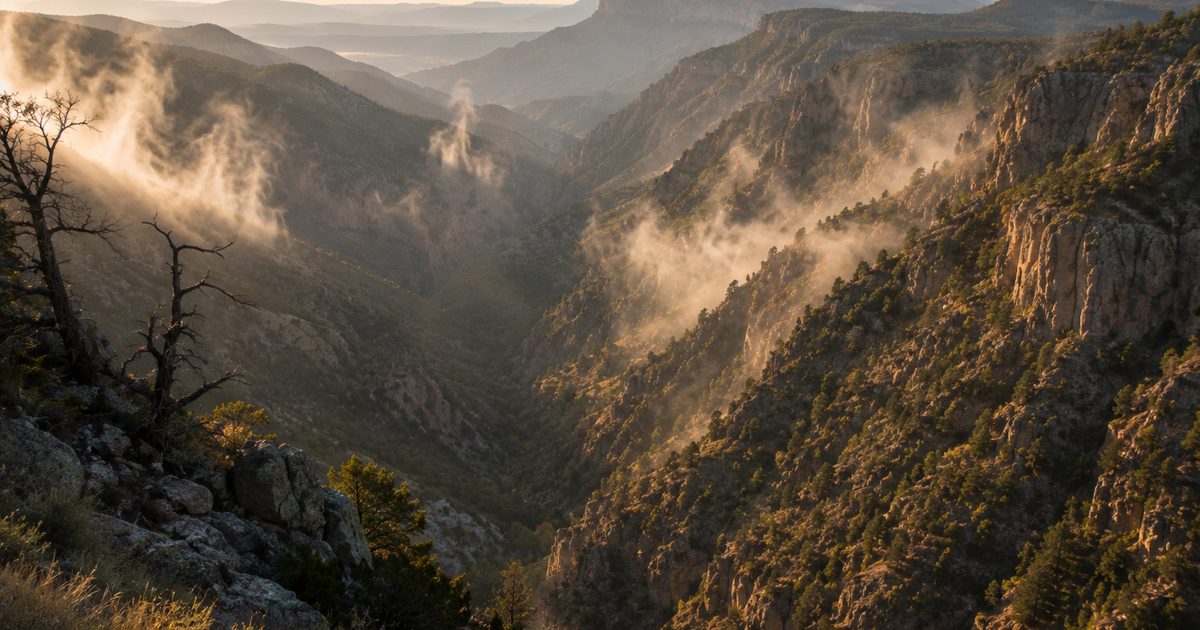
Nobody can make this decision for you. That’s the first honest thing worth saying about the guided vs. DIY question — because the answer depends on who you are right now, not who you were five years ago or who you want to be next season.
Your bank account is part of the equation. So is your experience level, your fitness, how much you can scout, what species you’re after, and — importantly — what you actually want out of the hunt. A hunter who wants to learn a piece of country over three seasons is asking a completely different question than a hunter who drew a once-in-a-lifetime Nevada elk tag and needs to fill it.
Both hunters need to make the right call. The right call isn’t the same call.
What a Guide Actually Buys You
Start with what you’re paying for before you decide whether it’s worth paying for it.
A good western outfitter knows their territory the way you know your neighborhood. The guide who’s been working the same Wyoming drainage for fifteen years has watched those elk for 150+ mornings across every weather pattern, pressure scenario, and rut phase imaginable. They know which ridgeline the bulls hit when a front pushes through. They know the two wallows that hold elk in a dry September. They know where the elk push when rifle season opens and camps start showing up on the main drainage. That accumulated intelligence is genuinely worth money to a hunter who shows up cold.
Beyond knowledge, guides bring infrastructure. Horses for deep backcountry access. A wall tent camp at 9,500 feet that’s already set up when you arrive. A wrangler who packs out your bull on the same day you shoot it. A cook. The daily logistics of a backcountry elk hunt — the ones that eat up time and energy on a DIY trip — are already handled. You wake up, eat breakfast, and hunt.
The flip side matters equally. A guide can’t guarantee a bull in range. They can’t control weather, elk behavior, or where the herd decided to go three days before your hunt. You’re buying their knowledge and logistics, not a guaranteed kill — and the hunters who get frustrated on guided hunts are often the ones who forgot that distinction.
What DIY Hunting Actually Costs You
The DIY case is strongest on paper because the financial comparison isn’t close.
A fully guided, 7-day rifle elk hunt in Colorado, Wyoming, or New Mexico runs $7,000 to $18,000 depending on the outfitter and unit. On top of that: non-resident tag ($660 to $900 depending on state), travel, gear, and tips for your guide and wrangler. All-in, you’re looking at $10,000 to $22,000 for a single guided elk hunt.
A well-executed DIY elk hunt on public land costs $2,500 to $5,000 total as a non-resident. That covers your tag, travel, fuel, food, and amortized gear. Hunters who own their kit and live in the Mountain West can run a DIY elk hunt for under $1,500. The gap is real.
For mule deer, the numbers shift somewhat — guided desert mule deer hunts for mature bucks in premium units run $4,000 to $10,000, while DIY general-season mule deer on public land in Colorado, Idaho, or Nevada can come in under $2,000. Drop the price floor further if you already own optics and pack gear.
But cost isn’t the whole story, and treating it like the whole story is how hunters end up frustrated on DIY trips they weren’t ready for.
Build the Real Cost of Both Options
When comparing guided vs. DIY, build a full line-item budget for each — including tag, travel, food, lodging, gear replacement, and pack-out costs. Most hunters underestimate DIY by 30-40% and overlook the multi-year scouting time investment that a guided hunt replaces.
The Success Rate Math Nobody Likes to Hear
First-time DIY elk hunters on public land in the West fill their tags at roughly 15 to 25 percent rates. In heavily pressured OTC units that see hundreds of hunters opening week, that number drops into single digits for nonresidents who’ve never set foot in the unit before opening morning.
Reputable guided elk operations run 55 to 80 percent kill rates. The better ones — running wilderness territory on limited-entry units — are north of 70 percent consistently. When you ask an outfitter for their success rate, always ask two follow-up questions: is that a kill rate or an opportunity rate, and is that the three-year average or just last year? A lucky year inflates the number. Three years shows the system.
Here’s the uncomfortable version of the math: five DIY elk attempts at 20 percent success = one elk in five years, roughly $12,500 to $20,000 in cumulative costs, and five seasons of hunting time. One quality guided hunt at 70 percent success = roughly a 70 percent chance of an elk in year one, for $12,000 to $18,000. On a pure per-elk-in-the-freezer analysis, the guided hunt often wins.
That analysis only applies if your goal is an elk in the freezer. A lot of hunters want more than that, and they’re right to.
The Case for DIY
DIY western hunting has something guided hunting can’t give you: ownership. You scouted the unit. You found the water. You glass the drainages yourself at 5 a.m. and you know why the elk are on that north-facing slope at that time of morning — because you figured it out through trial and error over two seasons. When you close the distance and make the shot, that’s entirely yours.
There’s no version of that on a guided hunt. A guide puts you in position; you pull the trigger. That’s real and meaningful. But it’s a different experience than arriving at a position you earned through months of preparation. Both are legitimate. They’re not the same thing.
DIY also builds hunting skills that compound. A hunter who grinds through three DIY western elk hunts — even without filling a tag — understands thermals, elk vocalization, pressure timing, and backcountry recovery logistics in ways that a guided hunt doesn’t teach. That knowledge makes every future hunt more productive. The learning curve has real value.
Scouting Is the Single Biggest DIY Variable
More than fitness, shooting ability, or gear, pre-season scouting hours predict DIY success. If you can get into your unit twice before the season — identifying water, wallow locations, and timber transition zones — you’ve compressed years of the learning curve into one offseason. If you can’t scout until opening morning, a guided hunt has a major structural advantage.
When to Go Guided
Some situations genuinely call for a guide. Not because you’re incapable — because the math is simply on the guided side.
Your first western elk hunt. The learning curve on western elk is brutal, and a first-time nonresident failure can permanently damage enthusiasm for a style of hunting that becomes life-defining once it clicks. A guided first hunt gives you a baseline. You see how elk behave under pressure, what an experienced guide reads in terrain and wind, and what a functional backcountry camp looks like. You can go DIY on the next one with real information.
Rare draw tags. If you’ve burned twelve years of Wyoming preference points on a top-tier unit, or you drew a New Mexico trophy elk unit after a decade-long wait, don’t gamble the tag on a DIY first attempt. Hire the best outfitter in that unit. The guide’s fee is small relative to what the tag represents, and outfitters who’ve specialized in a specific unit for fifteen years know where the mature bulls spend September. That knowledge is exactly what rare tags deserve.
Mountain goat, Dall sheep, and other technical species. Some animals require genuine wilderness access, specialized logistics, and navigational knowledge that goes beyond standard elk hunting competency. An Alaska Dall sheep hunt without an experienced guide on a first attempt is a safety risk, not just a success rate question. Guided isn’t optional for some species — it’s the right call regardless of your DIY experience elsewhere.
Limited time windows. A hunter who gets one week of vacation per year and can’t pre-scout has a structural disadvantage that money can solve. An outfitter eliminates the scouting requirement. If your time is genuinely the constraint, pricing that in is legitimate.
When DIY Makes Sense
DIY is the right answer under specific conditions. Here’s when I’d tell a hunter to go it alone.
You’ve scouted the unit. Not glassed it on OnX — actually been there. Identified water sources, feed areas, timber transition zones, and wallow locations. Two boots-on-the-ground scouting trips before the season change the entire probability distribution of a DIY hunt.
You know the unit. A hunter on their fourth or fifth DIY hunt in the same Colorado or Wyoming drainage is hunting with an information advantage that rivals a local guide. Repetition builds pattern recognition. The hunter who’s been in the same elk country for three seasons knows where the elk go when pressure builds — because they watched it happen.
You’re hunting with an experienced crew. Three or four hunters who’ve done western big game before — sharing glassing duties, calling shifts, meat-packing logistics — is a genuine force multiplier. Elk hunting solo on your first western trip is very hard. Elk hunting with a skilled, motivated group is genuinely great.
The tag is general-season OTC. Colorado OTC archery elk, Idaho general deer, Montana general elk — these are tags built for DIY hunters. The management structure assumes most people hunting them won’t have outfitter support. A DIY hunt on general OTC country with solid preparation has a real shot.
You’re hunting for the process as much as the result. If your goal is learning to hunt elk on your own terms, a DIY hunt where you don’t kill anything teaches more than a guided hunt where you do. Failure with context is information. Guided success leaves some of those gaps unfilled.
Don't DIY a Once-in-a-Lifetime Tag Cold
Applying for rare limited-entry tags is smart strategy. Hunting them without outfitter support on your first time in that unit is a high-risk play. The tag itself — plus years of preference points — is worth more than the outfitter fee. Don’t burn a once-in-a-decade opportunity to prove a point.
The Hybrid Options Worth Knowing
The guided vs. DIY framing creates a false binary. Two middle-ground options deserve serious consideration.
Drop camp. The outfitter handles one specific problem — getting you into backcountry that requires horses — and you handle everything else. You hunt independently from a camp that’s already set up when you arrive. Pack-out of your elk is included. The cost runs $1,500 to $3,500 per hunter, well below full guided rates, and you’re in country that DIY hunters on foot rarely reach. For experienced hunters whose main limitation is logistics rather than knowledge, this is the best value structure in western hunting.
Packing service only. On a self-guided hunt, you can hire a local packing service exclusively for elk retrieval — they come in with horses after your kill and pack the meat out. You find the elk, you kill it, you field dress it, you call them. This runs $400 to $800 per pack-out trip and solves the one problem that stops most solo DIY hunters cold: getting a bull out of deep country alone. More outfitters offer this service than hunters realize. Ask when you’re researching.
These hybrid options are worth pricing out before you commit to either end of the spectrum. A drop camp at $3,000 plus your $700 tag and $500 in travel can beat the cost of a failed DIY trip that ends with your elk rotting because you couldn’t pack it out in time.
Questions to Ask Yourself First
Before you pick up a phone to call an outfitter or start building a DIY scouting plan, answer these four questions honestly.
What’s your fitness level? A DIY backcountry elk hunt at 9,000 to 11,000 feet demands real physical preparation. If you’re not training for it months out, you’re going to suffer, and suffering hunters make poor decisions. A guided horseback hunt has lower fitness demands because horses do the heavy work.
How much scouting time can you realistically invest? Two pre-season scouting trips into your unit transforms a DIY hunt. Zero scouting trips going in cold gives a guided hunt a substantial advantage in the success rate math. Be honest about what you’ll actually do.
What’s the tag worth? A Colorado OTC archery tag that costs $660 and you can buy again next year is a different kind of risk than a Wyoming limited-entry tag you waited ten years to draw. Tag value should influence how much you’re willing to spend on outfitter support.
Are you hunting for the experience or the result? This is the most personal question, and it has no wrong answer. A hunter whose bucket-list item is genuinely the experience of independent backcountry hunting — the navigation, the camp craft, the self-reliance — gets something from DIY that a guided hunt can’t deliver, regardless of whether they fill a tag. A hunter who wants an elk for the freezer and will be genuinely unhappy going home empty-handed needs to factor that honestly into the guided vs. DIY math.
The Bottom Line
Guided hunting costs more and succeeds more often. DIY hunting costs less, teaches more, and means more when it works. Neither is universally right.
The hunters who make the wrong call are the ones who choose guided because they think they’re supposed to, or choose DIY because they’re embarrassed to hire help. Both are bad reasons. The right framework is simpler: match the hunting structure to your actual situation — your experience level, your tag type, your time availability, and what you’re genuinely after on the mountain.
If your goal is an elk on a once-in-a-decade tag, hire a guide for that unit. If your goal is learning to hunt elk country on your own terms over the next five years, go DIY and earn every piece of it. If you’re somewhere in the middle — experienced enough to hunt independently but limited by logistics — price out a drop camp and stop leaving country on the table.
Know what you need. Go get it.
Frequently Asked Questions
Is a guided western elk hunt worth the cost?
For first-time western elk hunters or hunters using rare limited-entry tags, yes. A reputable guided operation runs 55 to 80 percent kill rates versus 15 to 25 percent for first-time DIY hunters on public land. The cost difference — $10,000 to $22,000 guided versus $2,500 to $5,000 DIY — is real, but so is the probability difference. For hunters with experience and time to scout their unit, DIY narrows that gap significantly.
How much does a DIY western elk hunt cost?
A non-resident DIY elk hunt on public land runs $2,500 to $5,000 total, including tag, travel, food, and amortized gear. Hunters who already own their gear and live in the Mountain West can push the low end below $1,500 (tag + gas + food). The biggest variable is tag cost: non-resident elk tags range from $560 in New Mexico to $902 in Montana.
What is a drop camp and how does it compare to a guided hunt?
A drop camp is a logistics service where an outfitter transports you and your gear into remote backcountry by horse and sets up a base camp — you hunt independently from that camp without a guide. It typically costs $1,500 to $3,500 per hunter, compared to $7,000 to $18,000 for a fully guided hunt. It’s the right structure for experienced hunters who need backcountry access but don’t need daily guiding.
When does DIY hunting make more sense than hiring a guide?
DIY makes sense when you’ve pre-scouted the unit, you’re hunting general-season OTC tags, you’re going with an experienced group, and you value the independent hunting process as much as the outcome. It’s particularly strong for hunters who’ve done two or more western big game hunts and have developed the skill base to execute without a guide’s support.
How do I decide between guided and DIY for mule deer?
The same framework applies: if you’re hunting a general-season unit with solid scouting preparation, DIY mule deer on public land is a real option and can come in under $2,000 for a non-resident. If you’re hunting a premium limited-entry desert mule deer unit for a mature buck and you’ve drawn a tag you waited ten years for, a guided hunt with an outfitter who specializes in that unit is the right call.
Can I hire a guide just for the pack-out, not the full hunt?
Yes. Many outfitters in elk country offer pack-out-only services — you hire them specifically to retrieve your elk with horses after a kill, while you handle all the hunting yourself. This typically costs $400 to $800 per pack-out trip and is one of the best hybrid options for experienced DIY hunters whose main limitation is elk recovery in deep backcountry.
Next Step
Check Draw Odds for Your State
Tag-level draw odds across 9 western states — filter by species, unit, weapon, and points. Free to use.
Get the Insider Edge
Join hunters getting exclusive draw odds data, gear deals, and weekly hunt planning tips.
Related Articles
Arizona OTC Archery Deer 2026: Unit Limits and Closures
Arizona's OTC archery deer season opens August 21, 2026 — and units close the moment harvest limits fill. Here's every unit's limit, plus the best bets by real archery success rates.
Colorado OTC Elk in 2026: What Changed for Nonresidents
Colorado eliminated unlimited nonresident OTC archery elk west of I-25 for 2026 — and Gunnison rifle tags went draw-only. Here's exactly what's still on the shelf and how to hunt this fall anyway.
Colorado Reissue Licenses: How to Grab Returned Elk Tags
Every Wednesday through fall, CPW sells back surrendered limited licenses — including elk tags nonresidents can't get any other way in 2026. Here's the Tuesday-Wednesday ritual that actually lands one.
No comments yet. Be the first to share your experience!