San Juan Mountains Elk Hunting: Colorado's Backcountry Bull Country
The Weminuche Wilderness holds 499,000 acres of high-elevation elk habitat and some of Colorado's most trophy-class bulls. Here's how to hunt it.
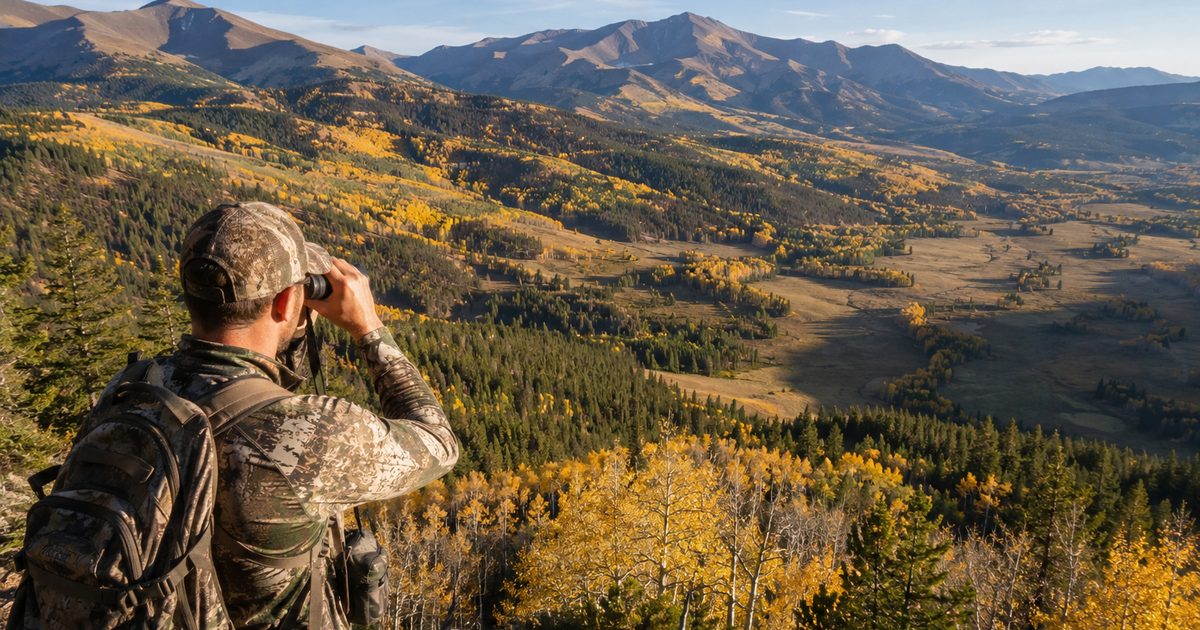
Most conversations about Colorado’s top elk country circle around the same handful of names — Gunnison Basin, the Flat Tops, the Uncompahgre, White River. The San Juan Mountains in the state’s southwestern corner rarely make the shortlist. That’s partly because the San Juans don’t produce hero photos at the trailhead. What they produce happens 15 miles in, above 12,000 feet, in country that makes the Weminuche Wilderness one of the most demanding and rewarding elk habitats in North America.
The Weminuche is the largest wilderness area in Colorado at 499,000 acres — a continuous block of high-elevation terrain stretching from Silverton to Creede, with no roads crossing its interior. Bulls in the deepest drainages live longer than elk in more accessible country. The access barrier functions as a natural filter, and the result is a population of mature bulls that push the 300–340” range in the right drainages.
This isn’t a hunt for everyone. But if you’re prepared for it, the San Juans deliver a backcountry elk experience that Colorado’s more famous units can’t match.
The Terrain: What You’re Walking Into
Southwestern Colorado’s San Juan range is the most rugged mountain terrain in the state. The range includes fourteen 14,000-foot peaks, and the Weminuche’s hunting country sits largely between 10,000 and 13,500 feet. There are no low-elevation escape routes.
The elk mirror the terrain. Through the summer months, bulls push to the highest basins — 12,000 to 13,000 feet, feeding on forbs above treeline before dropping back into the dark timber stringers as temperatures cool. By mid-September, the rut pulls bulls into predictable funnels: the saddles and drainages connecting alpine feeding areas to lower timber. These transition zones are where September archery hunters find vocal bulls.
October brings the general rifle seasons and, with any luck, the first significant snowfall. That’s when the San Juans show their best card. A three-inch snow event in early October — and they happen most years — will push elk down through the spruce-fir timber in classic migration patterns. Hunters who’ve identified those migration routes during pre-season e-scouting see elk that would never appear near a road.
E-Scout the Drainages Before You Commit a Trip
The Weminuche’s major drainages — Vallecito Creek, the upper Rio Grande headwaters, the Rincon La Vaca — are all visible on CalTopo and onX. Before you drive to a trailhead, trace every drainage from the 10,000-foot mark to the alpine basins above treeline. Saddles connecting basins are where September bulls funnel. Mark those transition zones — they’ll look exactly the same on the ground as they do on the map.
The forest type transitions dramatically by elevation. Below 10,000 feet you’re in scrub oak and pinon-juniper. From 10,000 to 11,500 feet it’s spruce-fir and aspen — classic dark timber elk country. Above that, you’re in krummholz and open tundra. Elk move through all three zones depending on season, temperature, and hunting pressure.
The GMUs: Which Units Cover the Weminuche
The Weminuche Wilderness sits primarily across four Game Management Units: 75, 76, 77, and 78. Each has a distinct character.
GMU 75 covers the western Weminuche and terrain north of Pagosa Springs. Horse access from the Pagosa side opens the southern drainages, and this unit sees more pressure than its neighbors because it’s more accessible. It’s still strong elk country — bulls to 300”+ are killed every season — but it’s the most hunted of the four core Weminuche units.
GMU 76 runs through the heart of the Weminuche from Silverton east toward Creede. The Silverton trailheads dump into this unit, and the terrain is genuinely severe — steep canyon walls, high passes, dense spruce-fir timber. Pack strings are common here because the alternative is a multi-day backpack with no margin for error. Success rates are strong when hunters reach prime habitat.
GMU 77 stretches from the eastern Weminuche toward the Rio Grande headwaters country around Creede. Less historically famous than 76, but many experienced San Juan guides quietly consider 77 one of the most productive elk units in the southern Rockies. Access from Creede is underutilized compared to the Silverton and Durango corridors.
GMU 78 sits on the southern and eastern edges of the Weminuche complex. It holds elk and sees somewhat less pressure than 75 and 76. Hunters approaching from the South Fork corridor find good access to GMU 78’s better drainages.
Outside the Weminuche core, the broader San Juan region includes GMUs 68, 69, 70, 79, and 80. These units have different draw structures and less of the extreme backcountry character — but they’re worth understanding for hunters building a multi-year San Juan strategy.
OTC vs. Draw: Understanding the Tag Structure
The San Juan GMUs offer both over-the-counter and limited entry tags, and knowing which is which matters before you write your application.
Archery: Most San Juan archery elk tags are over-the-counter. GMUs 75, 76, 77, and 78 all have OTC archery available for both residents and nonresidents. You can buy a tag and show up. No draw, no points, no waiting.
Muzzleloader: Also OTC in most San Juan units.
Rifle: This is where it splits. Several San Juan GMUs have general rifle tags, while the premium units — particularly those covering the deepest Weminuche drainages — are limited entry. The best limited entry San Juan rifle tags currently require 3–8 preference points for nonresidents, depending on the specific unit and season.
That’s a manageable point accumulation. Unlike Colorado’s truly elite limited-entry units (Unit 61 requiring 20+ points), the San Juan premium tags are within reach for hunters who’ve been building points for 4–8 years. For hunters starting from zero today, you’re looking at a realistic 5–10 year runway to the best tags, not a lifetime commitment.
Check current San Juan draw odds by unit on our Draw Odds Engine
Apply for Limited-Entry Tags Even With Zero Points
Even zero-point applicants draw limited-entry Colorado tags occasionally through the weighted system. If you’re new to Colorado and haven’t started accumulating points, apply for a mid-tier San Juan rifle unit now. You might draw. If you don’t, you’ll have a point to show for it — and the cost is $100 for nonresidents. Don’t wait until you “have enough points” to start the application. The clock started the moment you decided you wanted this hunt.
The Access Reality: Trailheads and Miles
The Weminuche has no internal roads. Every route into its core goes by foot, on horseback, or on a horse/mule pack string. That’s the defining fact of hunting here.
Primary trailhead corridors:
Silverton / North Silverton — The Elk Park and Molas Lake trailheads north of Silverton put you on the edge of GMU 76’s best country. From Elk Park, you’re looking at 12–18 miles to reach the upper drainages where mature bulls spend September. This is the classic route for Silverton-based outfitters with pack strings.
Vallecito Reservoir (Bayfield area) — One of the most popular access points into the southern Weminuche for GMU 75. The Vallecito Creek Trail offers relatively gradual terrain for the first several miles before the country gets serious. Outfitters working this corridor typically reach good elk habitat in 10–14 miles.
Creede / Rio Grande Reservoir — Access into GMU 76 and 77 from the east. The Weminuche Wilderness trail and the Rincon La Vaca drainage open up some of the least-pressured country in the entire Weminuche. This is the corridor that’s talked about least — and that consistently produces the oldest bulls.
South Fork / Wolf Creek area — Entry points into the eastern Weminuche and GMU 78. The Wolf Creek Pass area sees moderate hunting pressure, but hunters willing to push past the first few miles find solid elk populations.
Every one of these corridors requires between 10 and 20 miles of travel before you’re into the elk habitat that defines this hunt. Half-measures don’t work in the Weminuche. You’re in the backcountry or you’re not.
Trophy Quality: What the San Juans Produce
Weminuche elk aren’t the 350–380” genetics machines of a top-tier Gunnison unit in a perfect year. But that comparison misses the point. In the deepest drainages — where access actually limits hunting pressure — 5x5 and 6x6 bulls in the 300–340” range are realistic for a prepared hunter with 7–10 days in prime habitat.
The reason isn’t genetics. It’s age structure. Bull elk need to reach 6–8 years old to push 320”+ in most Rocky Mountain environments. In units with heavy hunting pressure, most bulls are killed before they reach that age. In the Weminuche backcountry, access barriers let bulls reach maturity. You’re not hunting genetics — you’re hunting time, and the Weminuche gives elk more of it than almost anywhere else in the state.
A mature Weminuche bull in his prime will have long main beams (typically 48–54”), good tine length, and — on the best animals — sixth points that add 20–30 inches to a final score. These aren’t the mythical 380” bulls that show up in paid advertisements, but they’re legitimate trophy-class animals by any measure.
The Altitude Factor: This Isn’t Optional
Much of the Weminuche’s prime elk habitat sits above 12,000 feet. Some of it pushes 13,500. If you’re driving from the Midwest or the coast and stepping onto a trail at 10,500 feet the morning after you arrive, you’re going to feel it.
Altitude sickness at these elevations isn’t just discomfort — it’s a hunt-ender. Headaches, shortness of breath, and fatigue at 12,000+ feet can sideline a hunter for two to three days. At that elevation, exertion that feels moderate at sea level becomes genuinely difficult. And you’re not just hiking. You’re packing out elk.
The standard advice is to arrive two days early and stay below 10,000 feet the first night. Most hunters ignore it. Don’t. Drive to Silverton or Creede a day early, sleep at elevation, and give your body a chance to start adjusting. You’ll hunt better for it.
A quartered bull elk at high altitude is a brutal pack-out by any standard. A mature Weminuche bull yields 200–230 lbs of boneless meat. Four to six loads, at altitude, over rough terrain. Plan your pack-out before you pull the trigger, and be honest with yourself about whether you have the logistics to do it.
High-Altitude Pack-Outs Kill Meat Fast
An elk killed in the upper Weminuche during September archery season can be sitting at 12,500 feet in 55–65 degree afternoon heat. Quarter and hang the meat in breathable game bags immediately — never leave quarters on the ground. With 15+ miles to the trailhead, you have two options: a multi-relay carry over two days, or a pack string. If you’re going DIY backpack, plan your pack-out logistics with the same rigor you plan your hunting strategy. Spoiled meat at that elevation is a $700 tag and two weeks of preparation wasted.
Season Structure and Timing
Archery (late August to late September): Opens the last day of August and runs through late September. The peak of the rut — mid-September, roughly September 10–20 — is the best time to call bulls in the timber. Vocal, aggressive bulls respond to challenge bugles and cow calls in the spruce-fir below treeline. Get here for the peak.
General Muzzleloader (mid-September): A short window that overlaps the end of the rut. Quiet and underutilized in many San Juan units. The muzzleloader hunter who gets deep in September can catch bulls still moving with cows.
Rifle Seasons (October): The general and limited-entry rifle seasons run through October and into early November. First rifle hits during the tail end of the rut when bulls are still somewhat vocal but also beginning to feed heavily. Second rifle overlaps the post-rut, when cold fronts move elk into predictable migration patterns.
The weather variable is everything in October. A dry, warm October in the San Juans means elk sit high and scattered. A cold front that drops four inches of snow on October 15 turns the migration on like a switch.
Outfitters and the Horse Access Advantage
Silverton, Durango, and Pagosa Springs all have established outfitter operations with deep San Juan experience. Several Silverton-based operations have been running pack strings into the Weminuche for three to four decades, with established base camps in the interior that take three to four days by horse to reach.
Horse access changes the calculus entirely. A pack string covers 15 miles per day with loads that would take a backpack hunter four trips. Outfitters with established spike camps in the heart of GMU 76 or 77 can put you 18 miles in with full camp equipment and multiple horses for meat retrieval — a setup that converts a physically punishing DIY backpack into a genuinely comfortable backcountry experience.
Drop camps — where an outfitter packs you in, sets up camp, and leaves you to hunt independently — typically run $2,500–$4,500 in the San Juan region. Fully guided pack-in hunts with experienced San Juan outfitters range from $6,000–$12,000 depending on season and services. The outfitters who’ve been in this country the longest know the elk patterns in specific drainages going back decades. That knowledge has real value when you’re on a once-in-a-decade limited-entry tag.
For DIY hunters, horse access trailheads near Silverton and Pagosa Springs are accessible to hunters who rent pack stock locally. Several livery operations near the Weminuche trailheads rent horses and mules to hunters with their own outfitting experience.
Practical Notes: Gear, Weather, and Comms
Silverton (elevation 9,318 feet) is the best staging town for GMU 76 hunters — small, expensive for groceries, but positioned perfectly. Durango (6,512 feet) is the practical base for longer trips, with better logistics and services, 90 minutes from the Vallecito trailhead.
Weather: Check forecasts obsessively the week before your hunt. The San Juans generate their own weather, and a 60-degree forecast in Durango can mean a 30-degree snowstorm at 12,000 feet. Pack for both scenarios regardless of what the forecast says.
Satellite communicator: Non-negotiable in the Weminuche interior. Cell service is zero from the moment you leave the trailhead. A Garmin inReach or SPOT device is the difference between a manageable emergency and a tragedy. A hunt this remote demands one.
Quick Reference: San Juan Elk Hunting
| Detail | Info |
|---|---|
| Primary GMUs | 75, 76, 77, 78 (Weminuche core) |
| OTC Archery | Yes — most San Juan units |
| Limited-Entry Rifle | 3–8 NR preference points for premium units |
| Application Deadline | April 7 in 2026 (verify current year at cpw.state.co.us) (CPW) |
| Archery Season | Late August – late September |
| Rifle Seasons | October – early November |
| Trailhead Access | Silverton, Vallecito Reservoir, Creede, South Fork |
| Typical Miles In | 10–20 miles to prime habitat |
| Elevation Range | 9,000–13,500 feet |
| Trophy Range | 300–340”+ in prime backcountry drainages |
Hunt unit boundaries and tag availability change annually. Always verify current regulations with Colorado Parks & Wildlife before applying or purchasing licenses.
Sources & verification
Seasons, license fees, application windows, and draw structure for Colorado change every year. Always verify the current details against the official Colorado agency before applying or hunting.
- Colorado Parks & Wildlife — cpw.state.co.us
Next Step
Check Draw Odds for Your State
Tag-level draw odds across 9 western states — filter by species, unit, weapon, and points. Free to use.
Get the Insider Edge
Join hunters getting exclusive draw odds data, gear deals, and weekly hunt planning tips.
Related Articles

Arizona Unit 36 Border Country Guide
Units 36A, 36B, and 36C sit along the Mexican border west of Nogales — overlooked Coues and javelina country with low draw requirements and solid hunting.

Montana General Elk Tag: Everything You Need to Know
The Montana general elk tag explained — who can buy one, what it covers, best districts, season dates, nonresident options, costs, and tactics for public land.

Arizona Unit 22 Guide: Tonto Basin
Unit 22 runs across the Tonto Basin and the Salt River country — productive elk in the highlands, accessible javelina in the desert, and some of Arizona's most underrated deer country.
No comments yet. Be the first to share your experience!