Colorado Hunting Guide: Elk, Deer, Pronghorn, Sheep, and the Draw System
How Colorado's preference point draw, OTC archery tags, and GMU system work for elk, mule deer, pronghorn, and bighorn sheep — with draw timelines and tag costs for nonresidents.
Disclaimer: Season dates, tag costs, and regulations change annually. Always verify current information with Colorado Parks and Wildlife at cpw.state.co.us before applying.
Colorado is the one western state that lets you hunt big game every single year as a nonresident — without a draw tag, without accumulated points, and without a guided hunt. That’s the OTC archery option, and it’s one of the most valuable hunting opportunities left in the West. At the same time, Colorado runs one of the most developed preference point systems in the country, with premium limited-entry units producing trophy-class animals that justify multi-decade point investments.
Understanding how both systems work, and how to use them together, is the foundation of any serious western hunting strategy.
How Colorado’s Draw System Works
Colorado uses a preference point draw — a weighted-random lottery where your odds increase proportionally with points you’ve accumulated. Each unsuccessful application earns one preference point for that species. When the draw runs, your name is entered multiple times based on your point total, giving higher-point applicants meaningfully better odds.
The system isn’t a pure queue. There’s no guarantee that a hunter with 10 points draws before a hunter with 9. What you get is significantly improved probability — and that probability compounds in the 5-to-20 point range where most premium units live.
The 20% Random Pool is a piece of Colorado’s draw that most hunters overlook. CPW reserves 20% of licenses in every limited-entry drawing for a completely random, point-blind pool. Any applicant — zero points or twenty — has an equal shot at that 20%. Rare, but real. First-year applicants occasionally draw premium units because of it, and that’s by design.
Point mechanics: You apply by the April 7 in 2026 (verify current year at cpw.state.co.us). Draw results post in late May or early June. If you don’t draw, CPW refunds your tag fee and you earn one point. If you draw, all your accumulated elk (or deer, or pronghorn) preference points reset to zero — the “point burn.” Strategic planning around point burn is one of the most important decisions in long-term Colorado hunting.
Point-only applications: Nonresidents can accumulate preference points without applying for a specific tag by purchasing a point-only application ($100/year for elk or deer). This lets you bank points in a species before you’ve decided on a specific unit, giving you flexibility down the road.
The bonus point lottery adds a second mechanism. Colorado sells bonus points through a separate lottery — a small additional entry that layers on top of preference points. It’s secondary and not the primary driver of draw success, but it’s part of the full picture. Some hunters purchase bonus point entries in addition to their preference point applications as a hedge against the purely probabilistic draw system.
Use the Draw Odds Engine to check current draw odds by unit, weapon type, and specific point level before deciding where to spend your application.
Apply Every Year From Day One
The most expensive mistake in Colorado’s draw is waiting to apply until you know exactly what unit you want. Preference points don’t accumulate until you start applying. A hunter who starts banking elk points at 22 years old and draws a premium rifle unit at 40 paid roughly $1,800 in point fees over 18 years — genuinely cheap for the hunt they get. Start the clock now.
The OTC Option: Hunt Colorado Every Year
This is what separates Colorado from every other premium western draw state. Colorado offers over-the-counter archery elk and deer tags for most game management units — no draw required. You buy online at cpw.state.co.us, pay the fee, and go hunting.
For nonresidents, the OTC archery elk license runs approximately $661.75 plus a $10.37 habitat stamp. It covers the late August through late September archery season, which overlaps precisely with the elk rut. OTC muzzleloader tags cover a roughly nine-day window in mid-September at the rut’s tail end.
The practical implication: while you’re accumulating preference points for a premium rifle unit over 10 or 15 years, you don’t have to sit home waiting. Hunt Colorado every September on OTC tags. You’re in the elk woods every fall, building experience, learning terrain, and filling freezers — while your points quietly compound in the background.
OTC archery hunting in Colorado isn’t a consolation prize. Archery hunters kill quality bulls every year in OTC units. The sorting mechanism is distance from roads: two miles of hiking filters most of the pressure. Five miles gets you into country that sees very few hunters in a season. The terrain in Colorado’s Western Slope national forests is rugged enough that genuine backcountry feels nothing like a crowded OTC corridor near a trailhead.
Colorado’s Game Management Unit System
Colorado divides the state into Game Management Units (GMUs) — numbered zones defining legal hunting areas, season dates, tag quotas, and species-specific regulations. There are over 200 GMUs. Each has its own draw odds, success rates, and character.
The GMU numbering is loosely geographic. Lower numbers concentrate in northern Colorado; higher numbers in the south and southwest. But unit quality doesn’t track to the number, so you’ll need to research specific units rather than relying on general geography.
For planning purposes, GMUs fall into three practical tiers:
- OTC units: Available archery and muzzleloader tags with no point requirement. These see the most pressure but hold the most accessible elk.
- Limited-entry units: Draw required. Quotas control hunter numbers. Success rates and bull age structure improve significantly over OTC.
- Premium limited-entry units: The top-tier GMUs with controlled access, best bull-to-cow ratios, and the longest draw timelines.
Elk: The Largest Herd in North America
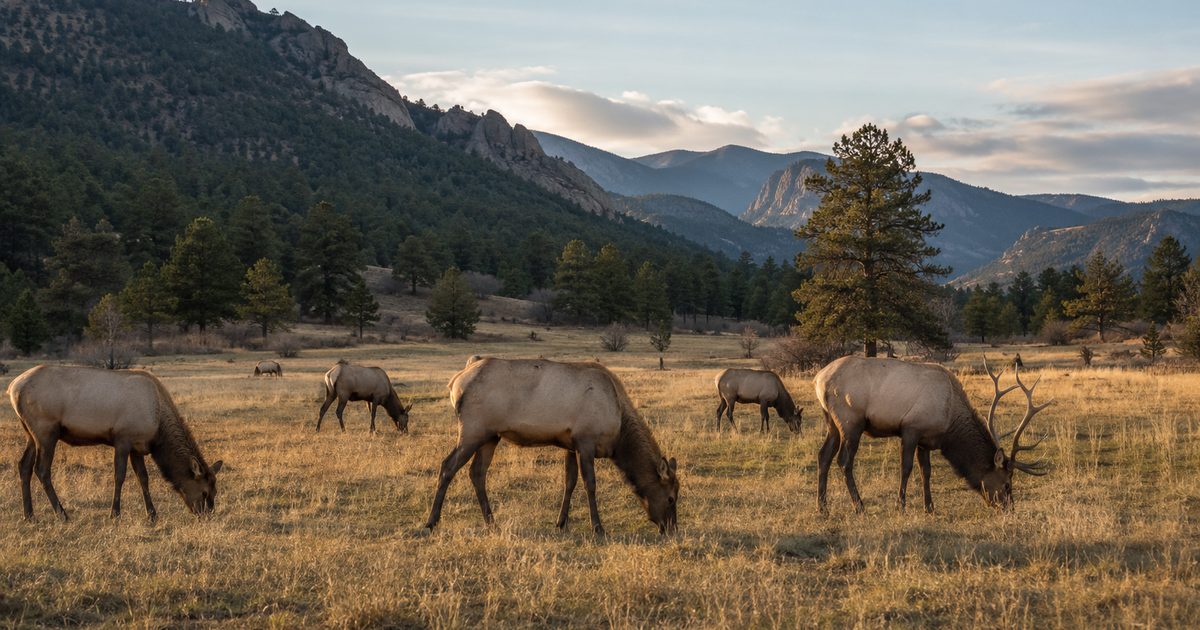
Colorado holds the largest elk herd in North America — roughly 280,000 to 300,000 animals. That’s a documented biological fact, not marketing copy. CPW manages around that population, and it’s why Colorado sells more elk tags than any other western state.
The herd distributes across every terrain type from Front Range foothills to alpine tundra above 12,000 feet. The heaviest concentrations live in western Colorado: the Gunnison Basin, the White River Plateau, the Flat Tops, the Uncompahgre, and the San Juan Mountains.
OTC Archery Elk: What to Expect
OTC archery season runs from late August through late September — peak rut timing. Bulls are bugling, chasing cows, and abandoning the caution they maintain the rest of the year. It’s as close to wide-open elk hunting as public land gets.
The catch is pressure. CPW sells upward of 80,000 to 100,000-plus archery elk tags in a typical year. Popular trailheads fill before dawn opening weekend. The two-mile rule applies: beyond two miles from a road, pressure drops noticeably. Beyond five miles, you’re hunting in near-solitude on public land that genuinely produces big bulls.
Units worth researching for OTC archery: GMU 75 (San Miguel/Montrose area), GMU 521 (northwest Routt National Forest), GMU 82 (San Juan NF near Durango), and parts of GMU 77 in the Gunnison corridor. These balance elk density with enough public land to get away from crowds if you’re willing to move your legs.
Premium Rifle Units: Draw Timelines
The elite rifle units require patience measured in years, not months. Here’s the realistic draw timeline for nonresidents in the top-tier GMUs:
| Unit | Region | NR Points to Draw | Notes |
|---|---|---|---|
| Unit 1 | Jackson County/North Park | 12–18 pts | High elk density, sage parks |
| Unit 2 | Mount Zirkel/Routt County | 18–22 pts | Vast wilderness, migration bulls |
| Unit 10 | Meeker/White River Canyon | 20–25 pts | Canyon country, 25–30% success |
| Unit 12 | Northwest corner | 12–16 pts | Accessible tier, solid bull numbers |
| Unit 22 | Northern Front Range corridor | 8–14 pts | Good value, strong elk population |
| Unit 23 | Steamboat Springs area | 10–15 pts | Mixed pressure, good elk density |
| Unit 54 | Gunnison Basin corridor | 12–18 pts | Part of the legendary Gunnison complex |
Unit 61 within the Gunnison Basin is the benchmark everyone references. Dark timber, high bull density, success rates above 30% for hunters who get off roads. It now requires 22 or more points for nonresidents to draw with high confidence, and that threshold moves up nearly every year. If you’re within striking distance of a unit’s current number, applying sooner beats waiting.
Mid-tier units like 12, 22, and 23 represent the realistic middle ground: a 5-to-15 point investment that gets you into a legitimate limited-entry draw hunt without waiting two decades. Success rates hover in the 20-to-28% range. These units don’t make magazine covers, but they’re where most Colorado elk hunters do their best work long-term.
Point Creep Is Real and Accelerating
Colorado’s premium units require more points each year as the applicant pool grows and accumulates points faster than tag quotas expand. Unit 61’s nonresident draw threshold has increased roughly one point every two years for the past decade. Applying for the unit you want as soon as you’re within realistic range beats waiting two extra years to feel “safe” — because the threshold will have moved to match you. Check current odds at the Draw Odds Engine before applying.
Tag costs for nonresidents (approximate):
- OTC archery/muzzleloader elk license: ~$661.75 + $10.37 habitat stamp
- Limited-entry bull elk license: ~$661.75 base + unit-specific tag fee
- Application fee: ~$50 per application
- Preference point-only application: ~$100/year
Mule Deer: Northwest Colorado and the Gunnison Basin
Colorado’s mule deer hunting divides cleanly. There are OTC areas with heavy pressure, and there’s a handful of premium GMUs that consistently produce Boone & Crockett-class bucks.
The trophy addresses concentrate in two regions. Northwest Colorado — GMUs 2, 10, 11, and 12 in the Meeker, Rangely, and Steamboat Springs area — holds some of the largest-bodied mule deer in the state. Pinon-juniper canyon country in this region grows bucks that reach their genetic ceiling on browse in rough terrain that keeps most hunters out. The Gunnison Basin (GMU 54 and adjacent units) produces exceptional bucks in broken sage and aspen country above 8,000 feet.
For nonresidents targeting trophy mule deer, draw timelines in premium deer units rival elk in their length:
| Unit | Region | NR Points (Trophy Bucks) |
|---|---|---|
| Unit 2 | Routt County/NW | 12–16 pts |
| Unit 10 | White River/Meeker | 10–15 pts |
| Unit 11 | Northwest corner | 8–13 pts |
| Unit 12 | Northwest corner | 8–14 pts |
| Unit 54 | Gunnison Basin | 10–15 pts |
OTC archery deer tags are available for most units — same structure as elk. Nonresidents can hunt Colorado mule deer on OTC tags every fall during archery season while building points for a premium rifle unit. This gets overlooked by hunters focused on elk, but archery hunters in northwest Colorado regularly encounter bucks that would end a season fast.
Nonresident deer license cost: approximately $381 base for limited-entry rifle or OTC archery. Verify current figures at cpw.state.co.us.
Stack Elk and Deer Applications in the Same Trip
Colorado lets you apply for both elk and deer in the same draw cycle — and hunt OTC archery for both simultaneously. A nonresident who buys OTC archery elk and deer tags in late August is legally hunting both species through late September. Many Western Slope GMUs hold both species in the same drainages, and the archery deer season overlaps the elk rut entirely.
Pronghorn: North Park Is the Premium Address
Colorado’s pronghorn population concentrates in the open basins and sage flats of the northern and eastern parts of the state. The premium address for nonresidents is North Park — the high-altitude basin in Jackson County encompassing GMUs 18, 19, 20, 21, and 22 east of Steamboat Springs.
North Park holds exceptional pronghorn bucks. The combination of rich subalpine basin habitat, limited development pressure, and consistent trophy output has made it one of the most sought-after pronghorn destinations in the West. Draw reality reflects that demand: nonresidents typically need 8 to 14 points to draw premium North Park buck tags, depending on the specific GMU and season.
Bow seasons within North Park draw at lower points than rifle. Some of the best rifle seasons push toward 12 to 14 NR points. Eastern Colorado pronghorn units near the Kansas and Nebraska borders draw at lower point requirements and offer a realistic near-term option for hunters who can’t wait a decade for North Park’s premier tags.
Nonresident pronghorn license cost: approximately $381 base + unit-specific tag fee for limited-entry tags. Application deadline is the same April 7 in 2026 (verify current year at cpw.state.co.us).
Bighorn Sheep: The Generational Hunt
Colorado bighorn sheep hunting isn’t measured in years. It’s measured in decades. This is one of those once-in-a-lifetime species in the most literal sense — most nonresidents who draw a Colorado sheep tag spent 15 to 25 years in the application process first.
Colorado numbers its sheep units with an “S” designation. The most prominent:
- S-9 (South Park): One of Colorado’s most coveted tags. Rocky Mountain bighorns in classic alpine terrain south of Fairplay. Nonresidents typically wait 18 to 25-plus years.
- S-34 (Tenmile Range/Breckenridge area): Another premium tag with comparable timelines. High-alpine terrain, strong ram age structure.
- Western Slope sheep units: Units in the Gunnison, Uncompahgre, and White River drainages hold good populations. Draw timelines generally run 15 to 22 years for nonresident applicants.
Colorado issues roughly 300 to 400 bighorn sheep tags annually across all units combined. The math is simply slow: with 400 tags statewide and thousands of applicants, waiting 20-plus years isn’t pessimism. It’s close to the median outcome.
The strategic takeaway: apply for bighorn sheep starting the first year you’re eligible. You won’t draw for a long time. That’s the point — the clock starts on day one. Every hunter who draws a Colorado sheep tag was once a first-year applicant who made the same decision to start early rather than waiting until the tag felt “realistic.”
Nonresident sheep license cost: approximately $2,000 to $2,500 when drawn. Verify at cpw.state.co.us — prices change annually.
Apply for Sheep and Goat From Year One
Colorado’s bighorn sheep and mountain goat point systems run independently from elk and deer. You can accumulate all four species’ preference points simultaneously for the cost of a separate application fee per species per year. A 25-year-old who starts applying for sheep, goat, elk, and deer today will have four independent point banks growing in parallel by the time any of them mature into real draw odds. The annual cost is manageable. The cost of starting late is a year of points you’ll never get back.
The Application Deadline and Season Calendar
Colorado’s annual big game draw runs on a fixed schedule:
| Milestone | Timing |
|---|---|
| Applications open | Early February |
| Application deadline | April 7 in 2026 (verify current year at cpw.state.co.us) |
| Draw results | Late May / early June |
| OTC archery tags on sale | Available online year-round |
| Archery season | Late August – late September |
| Muzzleloader season | Mid-September (~9 days) |
| 1st Rifle | Mid-October (~5 days) |
| 2nd Rifle | Late October (~9 days) |
| 3rd Rifle | Early November (~9 days) |
The April deadline is firm. Missing it means losing a year of points for every species you intended to apply for — that’s a real cost in both time and money. Calendar a reminder for March 1 and don’t assume you’ll remember when April arrives.
The Colorado Strategy: OTC Every Year, Points in the Background
The most effective long-term approach combines both systems simultaneously. Here’s what it looks like in practice.
Buy an OTC archery elk tag every year starting now. September in Colorado is one of the best elk hunting experiences available to any nonresident, and you’re in the field every fall regardless of draw results. Apply for limited-entry elk in a mid-tier unit — say Unit 22 or Unit 23 — and expect to draw in 8 to 12 years. Start a sheep point bank immediately and let it grow for 20-plus years in the background while you’re hunting elk in the foreground.
While you’re hunting OTC archery, you’re learning Colorado terrain, refining calling tactics, and potentially killing a great bull on public land with a bow. When you draw your limited-entry rifle unit a decade from now, you’ll hunt it with 10 years of Colorado experience behind you. That context makes the limited-entry tag dramatically more valuable than it would be for a hunter who’d never set foot in the state before drawing.
Track your preference points across all species and states with the Preference Point Tracker — it’s easy to lose count of accumulated points across multiple states and species when you’re running parallel applications.
The dual-track approach is how most successful Colorado hunters build their careers. OTC archery gives Colorado a role in your hunting life every single fall. Preference points give you something to look forward to over the next decade or two. Colorado is the rare state that rewards both patience and immediacy — which is exactly why it sits at the center of so many serious western hunting portfolios.
Season dates, tag costs, and regulations are subject to annual change. Always verify current information directly with Colorado Parks and Wildlife at cpw.state.co.us before applying.
Next Step
Check Draw Odds for Your State
Tag-level draw odds across 9 western states — filter by species, unit, weapon, and points. Free to use.
Get the Insider Edge
Join hunters getting exclusive draw odds data, gear deals, and weekly hunt planning tips.
Related Articles
Arizona OTC Archery Deer 2026: Unit Limits and Closures
Arizona's OTC archery deer season opens August 21, 2026 — and units close the moment harvest limits fill. Here's every unit's limit, plus the best bets by real archery success rates.
Colorado OTC Elk in 2026: What Changed for Nonresidents
Colorado eliminated unlimited nonresident OTC archery elk west of I-25 for 2026 — and Gunnison rifle tags went draw-only. Here's exactly what's still on the shelf and how to hunt this fall anyway.
Colorado Reissue Licenses: How to Grab Returned Elk Tags
Every Wednesday through fall, CPW sells back surrendered limited licenses — including elk tags nonresidents can't get any other way in 2026. Here's the Tuesday-Wednesday ritual that actually lands one.
No comments yet. Be the first to share your experience!